Anatolian Shepherd Behavior Problems and Solutions: A Real Owner’s Guide
It usually happens around month four. Your Anatolian Shepherd puppy — the one you brought home expecting a loyal, calm guardian — is now barking at the neighbor’s shadow at 2am, has decided the leash is a suggestion, and looked you dead in the eye this morning when you said “come” before turning around and walking the other direction.
You searched the internet. You found ten articles that all said the same thing: “Anatolian Shepherds need socialization and firm leadership.” Thanks. That doesn’t help when your 90-pound adolescent just body-checked the FedEx driver.
Here’s what nobody told you before you brought this dog home: almost every Anatolian Shepherd “behavior problem” is actually a guardian instinct doing exactly what it was designed to do — just in a context you weren’t prepared for.
The barking isn’t random. The ignoring you isn’t defiance. The suspicion toward strangers isn’t aggression. These are instincts honed over 6,000 years of livestock guardian work in the mountains of Turkey, and they don’t switch off because your dog lives in a suburban backyard now.
As an Anatolian Shepherd owner, I’ve learned that the behaviors that frustrated me most in year one were the same ones that made my dog exceptional at year three. The gap between frustration and appreciation is understanding — and that’s what this guide is for.
Not generic dog advice. Not breed-standard descriptions. Real answers from someone who has stood in a dark pasture at midnight, calling an Anatolian that decided the far fence line needed checking right now.
Understanding the Instinct Layer First
Before you can fix a single behavior, you need to understand what’s driving it. And with an Anatolian, the driver is almost always instinct — not attitude.
What LGD Instincts Look Like in Daily Life
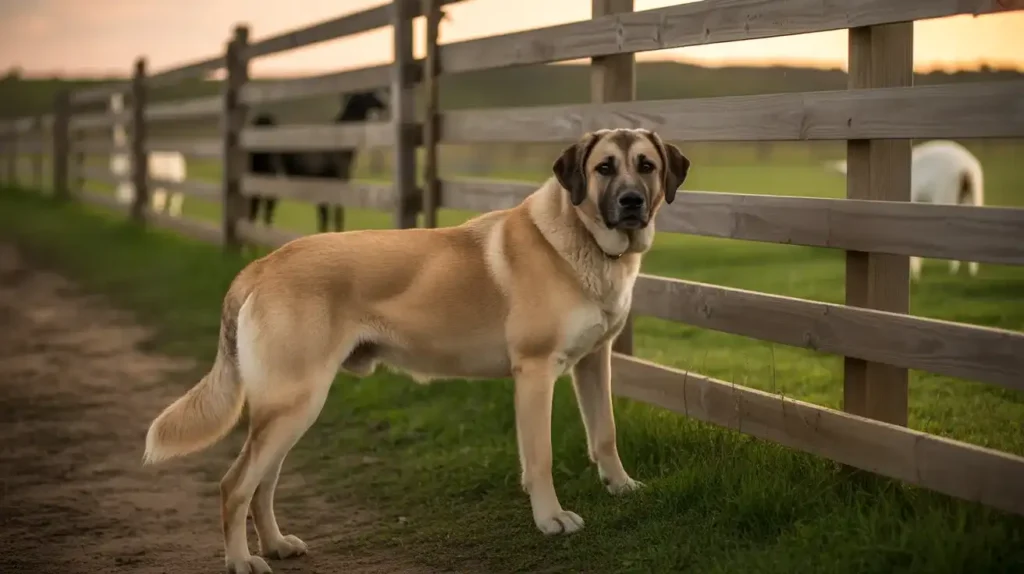
Livestock Guardian Dog instincts are hardwired, not trained. Your Anatolian didn’t learn to patrol, bark at unfamiliar sounds, or position itself between your kids and a stranger. It was born knowing these things. According to the AKC’s breed profile, Anatolian Shepherds are classified as a working breed with strong protective instincts and notable independence — traits specifically preserved through centuries of selective breeding.
In a home, these instincts show up as:
- Perimeter checking — pacing the fence, inspecting every sound, walking the property boundary
- Alert barking — announcing every delivery truck, stray cat, and gust of wind that crosses their radar
- Stranger wariness — refusing to warm up to new people until they’ve been assessed (sometimes for hours, sometimes for visits)
- Selective obedience — choosing not to come when called because their own threat assessment overrides your command
- Independent decision-making — ignoring you not because they’re dumb, but because they’re weighing the situation themselves
Many Anatolian Shepherd owners don’t realize that their dog patrolling the fence line at 2am isn’t a problem — it’s the dog doing exactly what 6,000 years of breeding designed it to do.
Territorial Instinct vs. Aggression — A Crucial Distinction
A territorial Anatolian that barks, positions itself, and watches a stranger with hard eyes is doing its job. An aggressive dog that lunges, snaps, or bites without warning or appropriate trigger is displaying unsafe behavior.
The difference matters enormously. One is manageable with structure. The other requires professional intervention. Most Anatolian “aggression” complaints are actually territorial responses that feel alarming because of the dog’s size — but they’re operating within normal breed parameters.
The behavior that looks like defiance is usually an Anatolian processing information independently. When your dog ignores a recall command and stares at the tree line instead, it’s not being stubborn. It heard something you didn’t, and it’s running its own risk assessment. That’s not a training failure — it’s the breed’s operating system.
🐾 Pro Tip: The Socialization Window — Why Weeks 6–16 Determine Your Dog’s Entire Social Future
The critical socialization period for any dog is between 6 and 16 weeks, but for Anatolians, it’s even more consequential. A guardian breed puppy that isn’t gently exposed to diverse people, environments, sounds, and animals during this window will default to suspicion of all novelty — permanently. You cannot fully undo a missed socialization window in an LGD. You can manage it, but you’ll always be working harder than an owner who got it right early. Prioritize this above all other early training.
The Most Common Anatolian Shepherd Behavior Problems
| Behavior Problem | Root Cause | Urgency | First Step |
|---|---|---|---|
| Excessive barking | Perimeter alert instinct | Moderate | Manage nighttime access; structured patrol time |
| Stranger aggression | Territorial guardian instinct | High | Controlled introductions on neutral ground |
| Dog aggression | Same-sex dominance; resource guarding | High | Separate and manage; assess pairing |
| Roaming / escaping | Territory expansion instinct | High | Audit fencing — 6ft minimum, coyote rollers |
| Leash pulling / reactivity | Independence + size + alert state | Moderate | Front-clip harness; direction-change drills |
| Jumping on people | Excited greeting; lack of early boundaries | Moderate | Four-on-the-floor rule; consistent enforcement |
| Resource guarding | Guardian instinct over territory/food | High | Trade-up games; avoid confrontation |
| Destructive digging | Thermoregulation; boredom; perimeter checking | Low | Provide a designated digging area; increase stimulation |
| Recall failure | Independent risk assessment overrides command | Moderate | Long-line training; ultra-high-value recall rewards |
Excessive Barking
Every Anatolian barks. That’s non-negotiable. The breed was designed to warn off wolves, bears, and thieves across miles of open pasture — a quiet Anatolian is a malfunctioning one.
Normal barking has a pattern: alert, assess, bark with purpose, then settle. Your dog hears something, announces its presence, and stops when the perceived threat moves on. Problem barking is continuous, escalating, and happens at everything regardless of actual threat — the wind, a leaf, the same neighbor it’s seen every day for two years.
Why it happens beyond instinct: Under-stimulation and boredom are the biggest amplifiers. An Anatolian with no job, no defined territory to patrol, and no mental engagement will bark at everything because everything becomes a potential threat in a bored guardian’s mind.
What doesn’t work: Bark collars. Yelling “quiet.” Punishing the dog for alerting. These suppress the behavior temporarily while increasing the dog’s frustration, which makes the barking worse long-term. You’re fighting against instinct with force, and instinct always wins.
What actually works:
- Bring the dog inside during peak nighttime hours (10pm–5am) if neighbors are a concern
- Give the dog a structured patrol routine — set times to walk the property boundary with you — which satisfies the instinct on your schedule
- Teach a “thank you” cue: acknowledge the alert (“good dog, I see it”), then redirect to a calm behavior. This tells the Anatolian you’ve received the report and it can stand down
- Increase daytime mental stimulation — puzzle feeders, scent work, or a defined job
Aggression Toward Strangers
This is the one that scares people — and it should be taken seriously, but also understood correctly.
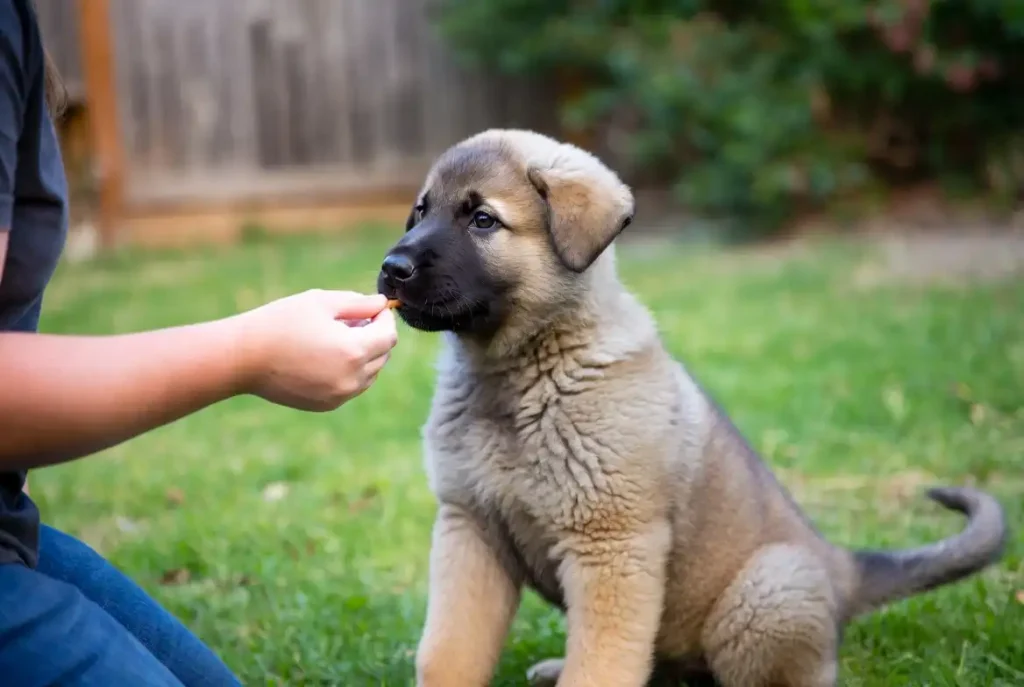
An Anatolian Shepherd that growls, positions itself between you and a stranger, and barks with authority is displaying territorial guardian behavior. It’s not random aggression. It’s a calculated response to an unfamiliar human entering the dog’s defined space.
The problem isn’t the instinct. The problem is when the dog can’t distinguish between the mail carrier and a genuine threat, or when the dog’s threshold is so low that every new person triggers a full response.
Missing the socialization window before 16 weeks changes everything. An Anatolian puppy that meets 50 different people between 8 and 16 weeks — in positive, controlled contexts — grows into an adult that can assess strangers rationally. An Anatolian that meets three people during that window will treat every unfamiliar human as a potential predator for the rest of its life.
Practical solutions:
- Introduce visitors on neutral ground first (the sidewalk, a park), then walk onto the property together
- Have visitors toss high-value treats without making direct eye contact or reaching toward the dog
- Establish a “visitor protocol” — the dog goes to a designated spot (crate, room, outdoor kennel) when guests arrive, and is introduced only after settling
- Never force greetings. An Anatolian that’s pressured to accept someone it hasn’t cleared will become more reactive, not less
Aggression Toward Other Dogs
Same-sex aggression is a known, documented reality in Anatolian Shepherds. Two intact males sharing a property will almost inevitably conflict. Two females can appear fine for months before a sudden, serious fight erupts — often around social maturity (18–30 months).
What owners try that fails: Letting the dogs “work it out.” With Anatolians, this doesn’t produce a stable hierarchy. It produces escalating conflicts that become genuinely dangerous.
What works:
- Opposite-sex pairings are the most stable multi-Anatolian arrangement
- Space management — each dog needs its own defined territory within the property, especially for feeding and resting
- Slow, structured introductions over weeks, not hours
- Neutering/spaying can reduce conflict but won’t eliminate it if the dogs are fundamentally incompatible
Running Off and Roaming
An Anatolian Shepherd’s territory is whatever it decides its territory is. Without adequate fencing, that territory will expand. Constantly.
This isn’t wanderlust or boredom-driven escape. It’s the dog doing its job — extending the perimeter to check for threats. The problem is that in a modern setting, an “extended perimeter” might include the neighbor’s yard, the highway, or the next county.
Why invisible fences fail with this breed: An Anatolian in full guardian mode will blow through the shock of an invisible fence without breaking stride. The pain threshold of a dog bred to confront wolves is higher than any electronic deterrent is designed for. And once through, the dog won’t come back across the boundary because the shock works both ways.
What you actually need:
- Minimum 6-foot physical fencing — solid wood, welded wire, or no-climb horse fencing
- Coyote rollers on top if the dog is a climber
- Buried wire or concrete footer along the base (Anatolians dig under fences as readily as they jump over them)
- Double-gate entry systems to prevent door-dashing during property access
Pulling on Leash and Leash Reactivity
Leash-training a 130-pound guardian breed that was never designed to walk politely on a lead is one of the most physically demanding aspects of Anatolian ownership.
Why it’s harder with this breed: Anatolians don’t walk to enjoy a stroll. They walk to patrol. Every leash walk is a working scan of the environment, and when they lock onto something interesting — another dog, a person, an unfamiliar sound — they drive toward it with the force of a small truck.
The right equipment: A front-clip harness (like a Freedom or Balance harness) redirects pulling force without choking the dog. Choke chains and prong collars create pain-based associations that backfire with a breed this independent — the dog learns to associate the pain with whatever it was looking at (another dog, a person), making reactivity worse.
The training approach: Direction changes. When the dog pulls, you silently change direction. The dog learns that pulling doesn’t get it closer to what it wants. This requires hundreds of repetitions, a calm handler, and the acceptance that a “walk” with a young Anatolian might cover 200 feet in 30 minutes. That’s normal. It gets better.
Jumping on People
When a 40-pound Anatolian puppy jumps on you, it’s cute. When a 120-pound adult does it, someone ends up on the ground.
Most jumping in Anatolians is excitement-based, not dominance. The dog is happy, overstimulated, and hasn’t learned that greeting humans happens with four feet on the floor.
The only thing that works: Absolute household consistency. Every person who interacts with the dog must follow the same rule: attention only happens when all four paws are on the ground. One family member who allows jumping undoes weeks of everyone else’s work. Teach an alternative greeting — “sit for hello” — and make it the only way the dog gets what it wants: your attention.
Resource Guarding
Resource guarding in Anatolians goes beyond food bowls. They guard space, territory, livestock, favorite resting spots, and sometimes specific family members.
Early warning signs: Stiffening over a food bowl. Hard staring when someone approaches a resting area. A low growl when another dog comes near. These are communications, not attacks — and they must be addressed early before they escalate.
What works: Trade-up exercises — approach the dog’s resource and offer something better, so the dog learns that humans approaching means good things, not loss. Never take a resource by force from a guarding Anatolian. You’ll win the object and lose the trust.
Destructive Behavior and Digging
Anatolians dig for reasons that make perfect sense once you stop thinking like a pet owner and start thinking like a working dog.
Why they dig: Thermoregulation (digging a cool pit in summer), den-building instinct, perimeter checking along fence lines, and — most commonly — boredom. An Anatolian without a job will create one, and that job is often remodeling your yard.
For pet owners: Provide a designated digging area (a sandbox or mulch pit), increase physical and mental exercise, and accept that some digging is normal for the breed. For working dog owners: digging along fence lines is the dog checking the boundary. Reinforce the base of your fencing and let the dog do what it does.
Not Coming When Called (Recall Issues)
The honest truth: reliable off-leash recall in an Anatolian Shepherd is one of the hardest things to achieve in all of dog training.
This breed was designed to work independently, often out of earshot of its handler. Coming when called means abandoning its own assessment of the situation and deferring to yours — which goes against every instinct it has.
What doesn’t work: Calling the dog’s name repeatedly from across the yard while it stares at you and does nothing. If you’ve done this, you’ve trained the dog that its name is background noise.
What works: Build recall from scratch using ultra-high-value rewards (real meat, not kibble). Start on a long line (30–50 feet) in a low-distraction environment. Make coming to you the best thing that happens all day. Practice hundreds of times before ever attempting off-leash recall. And even then — manage your expectations. Most Anatolian owners use long lines or fenced areas for the life of the dog. That’s not a failure. That’s responsible ownership of an independent breed.
“An Anatolian Shepherd doesn’t ignore you because it’s stupid. It ignores you because it’s busy thinking — and it thinks it’s smarter than you. Sometimes it’s right.”
Anatolian Shepherd Puppy Behavior Problems
Puppy problems in this breed are a different animal — literally. Anatolian puppies are bigger, stronger, more mouthy, and more intense than most breed puppies, and the adolescent phase can feel like living with a small, opinionated horse.
Biting and Mouthing
All puppies bite. Anatolian puppies bite harder and longer. This is a breed with strong jaws that was designed to physically confront predators — that bite pressure shows up early. Mouthy play that’s tolerable at 10 weeks becomes painful at 16 weeks and dangerous at 6 months if it hasn’t been addressed.
What works: Redirect to appropriate chew items immediately. When the puppy bites skin, end play instantly — stand up, turn away, walk out of the room. The puppy learns that biting humans ends all fun. Be consistent, and the mouthing decreases dramatically by 5–6 months.
The Adolescent Phase (10–18 Months)
In my experience working with large guardian breeds, the adolescent phase between 10 and 18 months is where most owners either build a great dog or lose control permanently.
This is the window where your Anatolian tests every boundary. Commands it knew perfectly at 8 months are suddenly “forgotten.” Destructive chewing peaks. Physical strength surges past most owners’ ability to control with force alone. Hormones amplify every instinct — guarding becomes more intense, territorial responses escalate, and the dog starts making its own decisions about who belongs on the property and who doesn’t.
The owners who get through this phase successfully are the ones who stay calm, stay consistent, and don’t escalate into punishment-based corrections out of frustration. The ones who lose the dog’s respect during this window spend years trying to get it back.
Training Approaches That Actually Work With Anatolians
⚠️ Expert Warning: Never Use Punishment-Based Training on an Anatolian — Here’s What Happens When Owners Do
Anatolian Shepherds do not respond to punishment the way most breeds do. A Labrador might cower and comply. An Anatolian will either shut down completely (becoming avoidant, unresponsive, and impossible to work with) or escalate — meeting force with force. In a 130-pound guardian breed, escalation is a safety issue. Dominance-based training methods — alpha rolls, leash pops, confrontational corrections — damage the trust relationship permanently. What I tell every first-time Anatolian owner is: you cannot bully this breed into obedience. You earn their cooperation, or you don’t get it.
What Does Work
Positive reinforcement + respect-based methods — this means rewarding the behaviors you want (with high-value food, praise, or access to something the dog values) while redirecting or managing the behaviors you don’t. It also means being clear, consistent, and calm. An Anatolian respects a leader who is predictable and fair, not one who is loud and forceful.
The Anatolian training formula:
- Short sessions — 5 to 10 minutes, max. These dogs check out mentally after that
- High-value rewards — real chicken, cheese, liver. Kibble won’t cut it for a breed that decides whether your request is worth its time
- Patience over repetition — don’t drill a command 50 times. Practice it 5 times well, then stop. Come back tomorrow
- Consistency across all family members — mixed messages create the most common behavior issues in Anatolians. If one person allows the dog on the couch and another doesn’t, the dog loses respect for both
| Training Approach | Works? | Why / Why Not |
|---|---|---|
| Positive reinforcement | ✔ Yes | Builds trust; motivates cooperation without conflict |
| Calm leadership / structure | ✔ Yes | Anatolians respect predictable, fair authority |
| Alpha rolls / physical dominance | ✘ No | Causes shutdown or escalation; damages trust permanently |
| Choke / prong collars | ✘ No | Creates negative associations; worsens reactivity |
| Clicker training | ✔ Yes | Precise communication; works well in short sessions |
| Electronic / shock collars | ✘ No | High pain threshold makes them ineffective; erodes trust |
| Repetitive drill-style obedience | ✘ No | Anatolians disengage quickly; short sessions are essential |
Working With a Professional Trainer
If you hire a trainer for your Anatolian, LGD experience is non-negotiable. A trainer who specializes in German Shepherds, Labradors, or even Malinois will not understand why your Anatolian won’t repeat a down-stay 15 times in a row. They’ll misread independence as defiance and apply techniques that destroy your dog’s trust.
Look for a trainer who is certified through a reputable organization like the AKC’s Canine Good Citizen program or holds credentials from a body that emphasizes force-free methods — and who has specific experience with livestock guardian breeds. Ask directly: “Have you worked with Anatolians or similar LGDs?” If the answer is no, keep looking.
You’ll find more guidance on selecting the right training approach in these Anatolian Shepherd care and training guides.
The One Thing Every Anatolian Owner Must Do in Year One
Establish a calm, clear social hierarchy. Not through intimidation — through structure. Feed at set times. Walk at set times. Rules are the same every day, from every person. The dog learns what to expect, what’s expected of it, and who is making the decisions. An Anatolian with clear leadership is a calm, confident dog. An Anatolian without clear leadership becomes anxious, reactive, and increasingly difficult to manage.
When Behavior Becomes a Safety Concern
Most Anatolian behavior is instinct-driven and manageable. But there’s a line — and responsible owners need to know where it is.
Warning Signs That Require Professional Help
The cases that concern me most are not the barkers or the fence-pacers — they’re the dogs that:
- Bite without escalating through warning signals first (no growl, no stiffening — just sudden contact)
- Display aggression toward family members they live with
- Show unpredictable aggression — no consistent trigger, no readable body language before the event
- Redirect aggression onto the handler during an arousal event (attacking you when you intervene in a dog altercation)
These behaviors go beyond instinct management and require a certified animal behaviorist — not a general dog trainer. The American Veterinary Medical Association provides guidance on assessing aggression and finding qualified professionals who can evaluate whether a dog’s behavior is within manageable parameters.
Bite History and Documentation
If your Anatolian has bitten someone, document everything: the date, the context, the trigger, the severity, the person’s behavior before the incident, and any witnesses. This isn’t about building a legal defense — it’s about identifying patterns. A single bite with a clear provocation trigger is a very different situation from multiple bites across different contexts.
When Rehoming Is the Right Decision
This is hard to write and harder to live. But sometimes the most responsible thing an Anatolian owner can do is recognize that their home is not the right environment for this specific dog. A dog that needs acreage shouldn’t spend its life in a quarter-acre lot. A dog that’s become genuinely dangerous around children cannot remain in a home with children.
Rehoming isn’t failure. Keeping a dog in a situation where it’s suffering or becoming dangerous — that’s failure. If you reach this point, work with an Anatolian-specific rescue organization that can match the dog with an appropriate home.
Environment and Lifestyle Fit: The Root Cause Nobody Talks About
Many Anatolian Shepherd owners don’t realize that most behavior problems trace back to the wrong living situation — not the wrong training program.
An Anatolian Shepherd in a studio apartment will develop behavior problems. An Anatolian on a quarter-acre lot with six-foot privacy fencing and three daily walks might do okay. An Anatolian on 5+ acres with a clear territory, a flock or family to guard, and room to move will thrive.
The Boredom-Aggression-Destruction Cycle
Here’s how it starts: an under-stimulated Anatolian with no job becomes hypervigilant. Hypervigilance leads to excessive barking and reactivity. Reactivity leads to frustration. Frustration leads to destructive behavior, redirected aggression, or escape attempts. The owner responds with more restriction. More restriction increases the boredom. The cycle tightens.
Breaking it requires meeting the dog’s needs at the source: space, stimulation, structure, and purpose. No training technique compensates for an environment that doesn’t fit the breed.
✔ DO This
- Provide at least a large fenced yard with room to patrol
- Give the dog a defined job — even if it’s guarding the house
- Schedule structured exercise and mental stimulation daily
- Bring the dog in at night if neighbor proximity causes conflict
- Invest in proper 6-foot fencing before the dog arrives
- Work with the breed’s instincts, not against them
✘ DON’T Do This
- Keep an Anatolian in an apartment or small home without a yard
- Rely on invisible fencing as a primary containment method
- Leave the dog alone in the yard for hours with no interaction
- Expect the dog to behave like a Labrador or Golden Retriever
- Punish natural guarding instincts like barking or patrolling
- Skip socialization and then blame the dog for being reactive
For owners navigating the realities of non-working Anatolian homes, explore trusted Anatolian Shepherd ownership resources written from direct experience with this breed’s unique needs.
Real-World Case Studies
Case Study 1: The Suburban Barker
Situation: A two-year-old male Anatolian in a suburban home with a half-acre lot. The dog barked constantly at neighbors through the fence, became leash-reactive on walks, and the owner was receiving noise complaints.
What the owner tried first: A bark collar, which suppressed the barking temporarily but made the dog anxious and increasingly unpredictable. When the collar came off, the barking returned worse than before. The owner also tried exhausting the dog with long runs — which made the dog physically tired but didn’t touch the underlying vigilance.
What actually worked (over 6 months): The owner blocked visual access to the fence line with privacy screening, eliminating the dog’s ability to patrol-bark at passing neighbors. The dog was brought inside from 9pm to 6am. Structured morning and evening walks along a consistent route gave the dog a predictable patrol that satisfied the instinct on the owner’s terms. A “thank you” acknowledgment-and-redirect protocol replaced the bark collar. A professional trainer with LGD experience helped the owner implement a calm, structured desensitization program for leash reactivity.
Key takeaway: The dog didn’t need to stop being an Anatolian. The environment needed to be managed so the dog’s instincts didn’t create neighborhood conflict.
Case Study 2: The Overprotective Farm Dog
Situation: A three-year-old female Anatolian on a working goat farm. The dog was excellent with the livestock but had started showing escalating aggression toward visiting family members — growling, blocking doorways, and once nipping a relative who tried to hug the owner.
Root cause: The dog had bonded exclusively with the primary handler (the farm owner) and had begun resource-guarding that person. With no socialization to regular visitors, the dog treated every non-resident human entering the farm as a threat to its primary charge.
What worked: A combination of management and training. Visitors were introduced off-property first, then walked onto the farm with the owner present. The dog was given a “place” command — going to a designated mat when visitors arrived. The farm owner also deliberately had family members participate in feeding and care routines during visits, so the dog learned to associate them with positive interactions. Over three months, the nipping stopped entirely. The growling reduced to occasional wariness with new people, which was managed with the same protocol.
Ongoing: Visitor introductions remain structured. The dog is still protective — that’s her job. But she now looks to the owner for direction before escalating.
As an Anatolian Shepherd owner, I’ve seen dozens of dogs labeled “behavior problems” that were simply guardian breeds doing guardian things — in environments that weren’t ready for them. Fix the environment and the structure before you try to fix the dog.
Frequently Asked Questions
The Dog Isn’t Broken. You Just Need Better Information.
If you’re reading this at 11pm after your Anatolian knocked someone over, barked for an hour straight, or stared you down when you said “come” — I get it. It’s exhausting. It’s humbling. And some nights it feels like you chose the wrong breed.
You didn’t.
You chose a breed that’s smarter than most owners expect, more independent than any training manual prepares you for, and more loyal than anything you’ve ever shared your home with. The behaviors that feel like problems today will become the traits you brag about in two years — the dog that kept coyotes off your property, the dog that positioned itself between your kid and a stranger without being asked, the dog that can read a situation from 200 yards away.
Understanding this breed is the real training tool. Once you see the instincts for what they are — not flaws, but features running on ancient software — everything shifts. You stop fighting the dog and start working with it. And that’s when the breed becomes everything you hoped it would be.
Keep learning. Keep building structure. Keep being the calm, consistent leader your Anatolian is looking for. And when you need guidance, come back to Anatolian Shepherd breed information and advice built by people who’ve lived this breed from the ground up.
You’re not alone in this. And your dog is going to be worth it.
🐾 Author Bio
Written by: Sarah Mitchell, Large Guardian Breed Content Writer at AnatolianShepherd.me
Experienced Anatolian Shepherd owner with hands-on knowledge of guardian dog behavior, training challenges, and breed-specific care.
Content reviewed using trusted veterinary and behavioral references alongside real owner experience for accuracy and reliability.
Disclaimer: This content is for educational purposes only and does not replace professional veterinary or certified animal behaviorist advice. If your dog displays dangerous aggression, consult a licensed professional immediately.