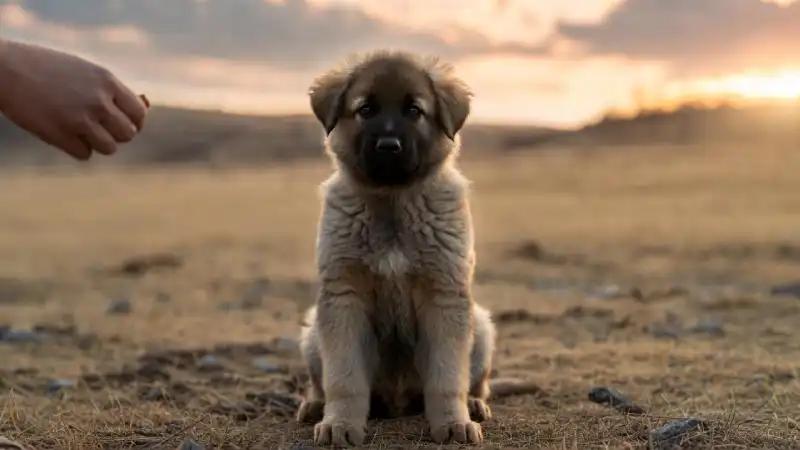
You’ve just brought home your Anatolian Shepherd puppy, and within the first week, you’re already questioning everything you thought you knew about dog training. Your neighbor’s Golden Retriever sits on command after three attempts. Your Anatolian? He looked at you, processed your request, and then walked away to investigate something far more interesting behind the couch. Welcome to the reality of training one of the most intelligent—and independently minded—guardian breeds on the planet.
Here’s what twenty-three years of working exclusively with livestock guardian breeds has taught me: Anatolian Shepherd puppies don’t refuse commands because they’re stupid or stubborn. They refuse because they’re running a cost-benefit analysis in their heads. They’re asking themselves whether your request serves a purpose worth their effort. Understanding this fundamental truth will completely transform your training approach and, ultimately, your relationship with your dog.
Why Traditional Dog Training Methods Fail With Anatolian Shepherds
Most puppy training guides are written with retrievers and herding dogs in mind—breeds that were selectively bred over centuries to work in close partnership with humans and respond instantly to direction. Anatolians come from a completely different working tradition. For over 6,000 years in the Anatolian plateau, these dogs were expected to make life-or-death decisions about predator threats without human guidance. A shepherd might be a kilometer away when a wolf approached the flock. The dog needed to assess the threat, choose the appropriate response, and execute it independently.
This genetic heritage doesn’t vanish because your puppy lives in a suburban backyard instead of a Turkish mountainside. When you give your eight-week-old Anatolian a command, his brain is still wired to evaluate: Is this request logical? Does it serve my core purpose? What happens if I ignore it?
The good news? Once you understand how to work with this decision-making process rather than against it, training becomes remarkably straightforward. You just have to adjust your expectations and methods.
The Critical 8-16 Week Socialization Window
I cannot stress this enough: the socialization window for Anatolian Shepherds is shorter and more critical than for most breeds. Between 8 and 16 weeks, your puppy is forming permanent neural pathways that will determine how he responds to unfamiliar people, animals, and environments for the rest of his life. Miss this window, and you’ll spend years managing a dog who views every delivery driver as a potential predator.
During this period, your puppy needs positive exposure to at least 100 different people—men with beards, women in hats, children of various ages, people using wheelchairs or crutches, individuals of different ethnicities. He needs to encounter other dogs, cats, livestock (if he’ll be working around them), loud noises, car rides, veterinary handling, and grooming procedures.
⚠️ Expert Warning: The Socialization Balance
Socialization doesn’t mean letting strangers pet your puppy. For guardian breeds, it means exposing them to stimuli while teaching them that you decide what’s a threat and what isn’t. Let your puppy observe new people and situations from a comfortable distance. Reward calm behavior. Never force interactions that make him uncomfortable—you’ll create the exact reactivity you’re trying to prevent.
Foundation Commands: What Actually Works
Forget the standard sit-down-stay progression that works beautifully for Border Collies. With Anatolian puppies, I’ve found a different sequence produces far better results. Start with name recognition and recall before anything else. These two skills could save your dog’s life, and they establish you as someone worth paying attention to.
Name Recognition (Days 1-7)
Every single time you say your puppy’s name and he looks at you—even briefly—mark that moment with a “yes” and deliver a high-value treat. I’m talking real chicken, freeze-dried liver, or cheese. Not kibble. Anatolians will not sell their attention cheaply, especially not for something they can get for free in their bowl later. Do this 30-50 times per day for the first week. By day seven, your puppy should whip his head toward you the instant he hears his name.
Emergency Recall (Weeks 2-8)
Choose a recall word you’ll never use casually—something like “HERE” or “COME NOW” spoken with urgency. This word should trigger an immediate, no-questions-asked return to you. Practice in low-distraction environments first, gradually adding challenges. The reward for this command should be extraordinary: an entire handful of treats, a favorite toy, or even a small meal. You’re building an association so powerful that it overrides whatever interesting thing your adolescent Anatolian is investigating when he’s about to bolt toward a road.
💡 Pro Tip: The Jackpot Method
Once a week, make your recall practice absurdly rewarding. I’m talking about giving your puppy an entire rotisserie chicken breast when he comes running. This unpredictable “jackpot” creates a gambling-like anticipation that strengthens recall more than consistent small rewards ever could. In 2026, behavioral research from the Canine Cognition Center at Duke confirmed what working dog trainers have known for decades: variable reward schedules produce the most reliable responses in independent breeds.
The Voice Factor: Why Tone Matters More Than Words
Anatolian Shepherds are extraordinarily sensitive to vocal tone. I’ve seen owners repeat commands louder and louder, wondering why their dog is backing away instead of complying. Here’s what’s happening: your frustrated tone is registering as instability. To a guardian breed, an unstable leader isn’t worth following.
Keep your voice calm, low, and confident. State commands once—maybe twice if there’s genuine distraction—then follow through with physical guidance or wait and reward when compliance happens. Repeating commands teaches your Anatolian that words are meaningless until you’ve said them five or six times. You’re training him to ignore you.
One technique I’ve used successfully for years: the whisper recall. Practice calling your puppy in progressively quieter voices. Anatolians have exceptional hearing, and there’s something about a calm, quiet summons that appeals to their dignified nature far more than shouting across a yard.
Addressing Nocturnal Barking: A Breed-Specific Challenge
Your Anatolian puppy will bark at night. Not occasionally—regularly. This isn’t a behavior problem; it’s genetics. These dogs have patrolled flocks during the darkest hours for millennia, alerting to threats humans couldn’t perceive. Your puppy hears a coyote three properties away. He smells a raccoon that crossed your yard an hour ago. His instinct is to announce these findings.
Complete suppression of alert barking is neither realistic nor desirable—you want a dog who tells you when something’s genuinely wrong. The goal is teaching your Anatolian the difference between a threat worth barking about and routine nighttime sounds.
Start by going to your puppy when he barks at night. Calmly assess what he’s alerting to. If it’s nothing concerning, tell him “thank you, that’s enough” in a matter-of-fact tone and redirect him. The “thank you” acknowledges his job; the “that’s enough” tells him you’ve taken over threat assessment. Over time, your puppy learns that you handle evaluation of nighttime disturbances—his job is just to alert you, not to keep barking until the perceived threat vanishes.
Training Tools and Technology in 2026
The pet technology landscape has evolved dramatically, and some innovations genuinely help with Anatolian training. GPS-enabled smart collars like the Fi Series 4 or Halo 3 allow you to create virtual boundaries and monitor your puppy’s location—invaluable for a breed known for expanding their patrol territory. These collars can alert you when your dog approaches boundary limits, giving you the opportunity to recall before an escape happens.
AI-powered bark analysis apps can now distinguish between alert barking, anxiety barking, and demand barking with roughly 85% accuracy. This data helps you understand what triggers your puppy’s vocalizations and adjust training accordingly. I’ve been testing BarkInsight Pro with several clients’ dogs, and the pattern recognition has revealed some surprising triggers—including ultrasonic sounds from smart home devices that humans can’t hear.
That said, technology supplements training; it doesn’t replace it. No collar or app builds the relationship and communication that successful Anatolian ownership requires.
The Independent Nature: Pros vs. Cons for Training
| Aspect | Advantage | Challenge | Training Adaptation |
|---|---|---|---|
| Decision-Making | Can assess situations without handler input | May override commands they deem unnecessary | Make commands logical and consistent |
| Problem-Solving | Figures out complex tasks independently | Also figures out how to escape enclosures | Provide mental enrichment; secure 6-foot fencing |
| Confidence | Rarely develops fear-based behaviors | Not intimidated by handler frustration | Lead through respect, never through force |
| Loyalty | Profoundly bonded to family | May not respond to unfamiliar handlers | All family members must participate in training |
| Patience | Can wait motionless for hours if needed | May appear to ignore commands while “thinking” | Allow processing time; don’t repeat commands |
Common Training Mistakes to Avoid
After working with hundreds of Anatolian owners, these are the errors I see most frequently:
- Using dominance-based methods—Alpha rolls, leash corrections, and intimidation tactics create defensive aggression in guardian breeds, not compliance
- Skipping the socialization window—Assuming your puppy will “grow out of” reactivity toward strangers (he won’t; he’ll grow into it)
- Training sessions that are too long—Five minutes of focused work beats thirty minutes of frustrated repetition
- Expecting Labrador-like eagerness—Anatolians show affection and engagement differently; learn to read their subtle signals
- Inconsistent rules among family members—If one person allows the puppy on furniture and another doesn’t, your Anatolian will test boundaries constantly
- Underestimating their memory—Anatolians remember negative experiences for years; one bad veterinary visit can create lifelong handling issues
When to Seek Professional Help
Not every training challenge requires professional intervention, but some situations genuinely do. Seek a qualified behaviorist—specifically one experienced with livestock guardian breeds—if your puppy shows resource guarding that’s escalating rather than improving, aggression toward family members, extreme fear responses, or if you’re simply feeling overwhelmed. There’s no shame in asking for help. The worst outcomes I’ve seen have come from owners who waited too long, hoping problems would resolve on their own.
When choosing a trainer, ask about their specific experience with Anatolians or similar LGD breeds. Methods that work beautifully with German Shepherds can backfire spectacularly with guardian breeds. Look for certifications from organizations like the CCPDT or IAABC, and prioritize trainers who use positive reinforcement as their primary approach.
People Also Ask
At what age should I start training my Anatolian Shepherd puppy?
Begin the moment you bring your puppy home, typically around 8 weeks. Early training focuses on name recognition, positive associations with handling, and socialization rather than formal obedience. Structured command training can begin around 10-12 weeks, but keep sessions under five minutes and always end on success.
Are Anatolian Shepherds easy or hard to train?
They’re neither—they’re different to train. Anatolians are highly intelligent and capable of learning complex behaviors, but they lack the eager-to-please drive of retriever breeds. Success requires understanding their independent nature, using high-value rewards, keeping training sessions brief, and building genuine respect rather than demanding blind obedience.
How do I stop my Anatolian Shepherd puppy from being aggressive?
First, distinguish between true aggression and appropriate guardian behavior. Wariness toward strangers is breed-typical and not aggression. If your puppy is showing genuine aggressive responses—lunging, snapping, or sustained growling—toward family members or in inappropriate contexts, consult a veterinary behaviorist immediately. Early intervention prevents escalation.
Can Anatolian Shepherds be trained off-leash?
With extensive training, some Anatolians achieve reliable off-leash behavior in familiar, low-distraction environments. However, their strong prey drive and territorial instincts make off-leash reliability in public spaces extremely challenging. Most experienced owners use long-lines or secure fenced areas rather than risking true off-leash freedom. A GPS collar provides an important safety backup.
How long does it take to fully train an Anatolian Shepherd?
Anatolians mature slowly—physically until around age 2, mentally until age 3 or 4. Expect consistent improvement throughout this period rather than a specific endpoint. Basic obedience can be established in the first year, but impulse control and reliable behavior in challenging situations often take until full maturity. Training an Anatolian is genuinely a multi-year commitment.
Training an Anatolian Shepherd puppy requires patience, consistency, and a fundamental shift in how you think about the human-dog relationship. These aren’t dogs that follow commands to make you happy—they follow commands when they trust your judgment and understand the purpose behind your requests. Build that trust, communicate clearly, and respect their intelligence. You’ll end up with a companion whose loyalty and capability exceed anything you’ve experienced with other breeds.
Leave a Reply