The world of large livestock guardian dogs is filled with magnificent breeds, but few comparisons spark as much curiosity and confusion as the Anatolian Shepherd versus the Kangal. Often mistaken for one another, these two Turkish titans have distinct histories, appearances, and even temperaments. Understanding the differences is crucial for anyone considering welcoming one of these powerful guardians into their life.
This guide will cut through the confusion, providing a clear, side-by-side look at these two remarkable breeds to help you understand which legendary protector might be the right fit for you.
A Tale of Two Turkish Titans: Origins and History
While both breeds hail from Turkey, their specific origins and historical development set them on separate paths.
The Anatolian Shepherd: The Guardian of the Plateau
The Anatolian Shepherd is considered a landrace breed from the Anatolian plateau (modern-day Turkey). This means it was developed over thousands of years through natural selection and functional breeding by shepherds, rather than in a controlled kennel environment. “Anatolian Shepherd” was historically an umbrella term for various regional types of large livestock guardian dogs in Turkey.
- Key Takeaway: Bred for versatility and resilience across a vast region, leading to more variation in appearance.
The Kangal: The Pride of Sivas
The Kangal Dog originates specifically from the Sivas province, particularly the Kangal district. It has been selectively bred for centuries by shepherds in this region to maintain a very specific type, known for its power, speed, and distinctive black mask. The Kangal is celebrated as a national treasure in Turkey.
- Key Takeaway: Bred for consistency and purity in a specific region, resulting in a more uniform appearance and temperament.
Side-by-Side: Breaking Down the Key Differences
The most noticeable differences between these two breeds lie in their appearance, official recognition, and subtle temperamental nuances.
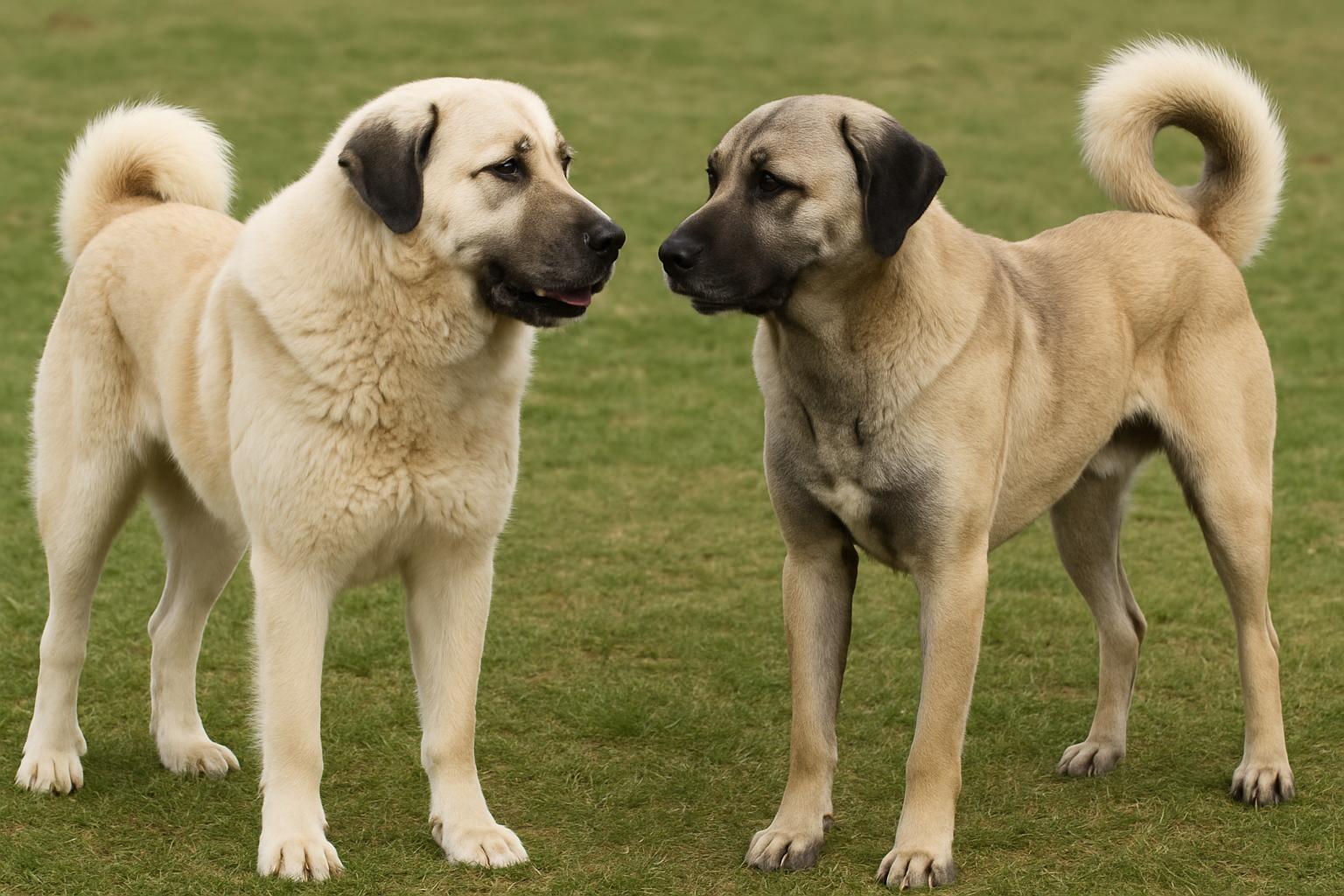
At a Glance: Anatolian Shepherd vs. Kangal
| Feature | Anatolian Shepherd | Kangal Dog |
|---|---|---|
| Origin | Anatolian Plateau (General Region) | Sivas Province, Kangal District (Specific Region) |
| Breed Type | Landrace | Distinct, Standardized Breed |
| AKC Recognition | Recognized as its own breed. | Recognized as its own breed (as of 2022). |
| UKC Recognition | Recognized as its own breed. | Recognized as its own breed. |
| General Build | Leaner, more athletic, lankier. | Stockier, more muscular, “bullier” head. |
| Coat & Color | Variety of colors: fawn, brindle, white, pinto. | Always solid fawn to dun (grayish-yellow) with a black mask. |
| Height/Weight | 27-29 inches, 80-150 pounds. | 28-32 inches, 90-145 pounds. |
| Tail | Curls up and over the back, especially when alert. | Curls up, forming a full curl. |
The Most Important Distinction: Temperament and Drive
While both breeds are intelligent, loyal, and protective, their “style” of guardianship can differ.
Anatolian Shepherd Temperament
The Anatolian is an independent and highly adaptable thinker. Bred to guard flocks across varied terrain with minimal human guidance, they are incredibly self-reliant.
- Protective Style: More of a “deterrent” guardian. They use their imposing presence and loud bark to warn off threats before a physical confrontation is necessary. They are known for being slightly more adaptable to different situations.
- With Family: Deeply loyal and calm with their inner circle, but can be more reserved and aloof with strangers.
Kangal Temperament
The Kangal is often described as having a more focused and intense protective drive. Their breeding was tightly controlled to enhance their ability to confront large predators directly.
- Protective Style: More of a “confrontational” guardian. They are known for their confidence and are more likely to stand their ground and physically engage a threat to protect their flock or family.
- With Family: Fiercely loyal and gentle with their family, often forming an incredibly strong bond with a single person. They are known for a calm, stable demeanor at home.
Which Guardian is Right for You? A Decision-Making Table
Choosing between these two breeds depends heavily on your experience, lifestyle, and property.
| Consider This… | An Anatolian Shepherd Might Be Better If… | A Kangal Might Be Better If… |
|---|---|---|
| Experience Level | You have some experience with independent, giant breeds. | You are a highly experienced handler of powerful guardian breeds. |
| Your Property | You have a large, securely fenced property in a rural/suburban area. | You have a very large, working farm or ranch with persistent predator pressure. |
| Your Need | You want a formidable visual deterrent and a loyal family companion. | You need the ultimate livestock guardian for a high-threat environment. |
| Temperament Preference | You prefer a highly intelligent, independent, and adaptable dog. | You prefer a dog with a more predictable, stable, and intensely focused temperament. |
The Final Verdict: Siblings, Not Clones
The Anatolian Shepherd and the Kangal are two sides of the same ancient coin. They share a common purpose and a noble heritage, but centuries of specialized breeding have refined them for slightly different expressions of that purpose.
- Choose an Anatolian Shepherd for a highly intelligent, adaptable, and majestic family guardian who will deter threats with its presence and bark.
- Choose a Kangal if you are an experienced owner on a working property and seek the pinnacle of focused livestock guardianship, with a dog known for its unwavering courage and physical power.
Both breeds require dedicated socialization, secure fencing, and an owner who understands and respects their powerful instincts. Whichever you choose, you will be gaining a loyal companion with a history of bravery that stretches back thousands of years.
Leave a Reply