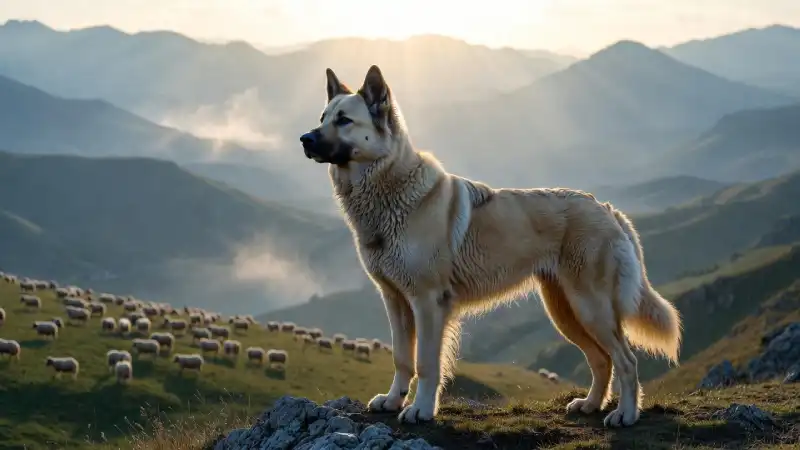
The first time I watched an Anatolian Shepherd assess a potential threat—ears forward, body still as stone, eyes locked on a distant coyote—I understood why this breed has protected livestock across the harsh Anatolian plateau for over six thousand years. This wasn’t a dog waiting for commands. This was a guardian making calculations, weighing options, deciding independently whether intervention was necessary. That moment changed everything I thought I knew about dogs.
If you’re researching the Anatolian Shepherd, you’re likely drawn to their commanding presence and legendary protective instincts. But this breed isn’t for everyone. They’re magnificent, yes—but they’re also challenging, independent, and require an owner who understands that living with a livestock guardian dog is fundamentally different from owning a typical companion breed. Let me share what fifteen years of working with these dogs has taught me.
Anatolian Shepherd at a Glance: Quick Breed Facts
| Characteristic | Details |
| Origin | Anatolia region, Turkey (6,000+ years) |
| Height | Males: 29–32 inches | Females: 27–31 inches |
| Weight | Males: 110–150 lbs | Females: 80–120 lbs |
| Lifespan | 11–13 years (exceptional for giant breeds) |
| Coat Type | Short to medium double coat, weather-resistant |
| AKC Group | Working Group (recognized 1996) |
| Primary Purpose | Livestock guardian dog (LGD) |
| Exercise Needs | Moderate (patrol instinct, not high-energy) |
| Grooming | Weekly brushing; heavy seasonal shedding |
| Good With Children | Yes, with proper socialization and supervision |
The Ancient Origins: Where Anatolian Shepherds Come From
The Anatolian Shepherd’s history stretches back to the Bronze Age, making this one of the oldest domesticated dog lineages still working today. Archaeological evidence from ancient Babylon and Assyria—dating to roughly 2000 BCE—depicts large, mastiff-type dogs guarding flocks in exactly the same posture you’ll see Anatolians assume today.
The breed developed on the Anatolian plateau of central Turkey, a region of extreme temperature swings, rugged terrain, and serious predator pressure from wolves and bears. Turkish shepherds didn’t breed these dogs for speed or herding ability. They bred them for one thing: the judgment and courage to protect livestock without human supervision, sometimes for days at a time.
According to the American Kennel Club’s breed standard, Anatolian Shepherds were first imported to the United States in the 1950s for a USDA predator control study. The breed gained AKC recognition in 1996, though they remain relatively uncommon compared to more popular guardian breeds.
This ancient working heritage isn’t just historical trivia—it directly shapes behavior you’ll observe in your Anatolian today. When your dog patrols your fence line at 3 AM or positions himself between your children and a stranger, he’s following instincts refined over hundreds of generations. Understanding this context helps you work with your Anatolian’s nature rather than against it.
Physical Characteristics: Built for Protection
Everything about the Anatolian Shepherd’s physical structure serves their guardian function. These are large, powerful dogs—males typically stand 29 to 32 inches at the shoulder and weigh between 110 and 150 pounds. Females are noticeably smaller but still substantial, ranging from 80 to 120 pounds.
Their build is athletic rather than bulky. Unlike some mastiff breeds that sacrifice agility for mass, Anatolians maintain the speed and endurance needed to chase down predators across rough terrain. They have deep chests, strong necks, and powerful hindquarters capable of explosive acceleration when needed.
Coat Colors and Patterns
Anatolians come in virtually every color and pattern, though some are more common than others:
- Fawn with black mask—The most recognizable and common coloration
- Brindle—Tiger-stripe pattern ranging from light to dark
- White or cream—Sometimes confused with Great Pyrenees
- Pinto—Large patches of color on white
- Blue fawn, liver, and biscuit—Less common but equally valid
The double coat is designed for harsh weather extremes. The outer coat is medium-length and slightly coarse, while the dense undercoat provides insulation against both cold and heat. Expect significant shedding twice yearly when the undercoat “blows”—during these periods, daily brushing is essential.
⚠️ Important Physical Note
Many Anatolian Shepherds are confused with the Turkish Kangal, and the distinction remains controversial. Some breed registries consider them the same breed; others maintain they’re separate. For practical purposes, dogs sold as “Anatolian Shepherds” in the United States may show significant variation in size, coat length, and coloration depending on their lineage. Focus on temperament and health rather than strict adherence to any single appearance standard.
Temperament: Understanding the Guardian Mindset
Here’s where many prospective owners make critical mistakes. The Anatolian Shepherd temperament is often described with words like “loyal,” “protective,” and “intelligent”—all accurate, but incomplete. What those words don’t capture is the profound independence that defines this breed.
As someone who provides Anatolian Shepherd care guides, I constantly remind new owners: these dogs were bred to make life-or-death decisions without human input. A shepherd might be miles away when a wolf pack approached. The dog needed to assess the threat level, choose between intimidation and confrontation, and execute that decision independently.
This genetic programming doesn’t disappear because your Anatolian lives in a suburban backyard. When you give a command, your dog is evaluating whether that command makes sense given the current situation. They’re not being stubborn—they’re doing exactly what they were bred to do.
Key Temperament Traits
- Independent decision-making—Will evaluate commands before obeying
- Territorial—Takes ownership of property and family seriously
- Reserved with strangers—Not aggressive, but not welcoming either
- Calm and patient—Not hyperactive; conserves energy for when it matters
- Highly perceptive—Notices subtle environmental changes humans miss
- Nocturnal alertness—Most active during dawn, dusk, and nighttime hours
- Deeply loyal—Forms intense bonds with family members
Many Anatolian Shepherd owners don’t realize their dog’s apparent aloofness is actually continuous threat assessment. When your Anatolian lies calmly in the yard, seemingly ignoring everything, they’re actually cataloging every sound, scent, and movement in their environment. The moment something triggers their “this doesn’t belong” response, you’ll see that calm transform instantly into focused attention.
Anatolian Shepherds With Families and Children
Well-socialized Anatolians can be wonderful family dogs, but this requires deliberate effort and realistic expectations. Their protective instincts extend powerfully to children they consider part of their “flock”—I’ve watched Anatolians position themselves between toddlers and perceived threats with remarkable consistency.
The challenge comes from their size and guardian nature. A 130-pound dog playing with a small child can cause accidental injuries simply through enthusiastic movement. Additionally, Anatolians may interpret rough play between your children and visiting friends as a threat that requires intervention.
💡 Pro Tip: Safe Family Integration
Teach your Anatolian a reliable “place” command—a designated spot where they observe family activities without participating. This gives your dog a job (watching) while preventing them from inserting themselves into situations they might misread. Practice this during playdates so your dog learns that excited children aren’t threats requiring protection.
With Other Pets
Anatolians raised alongside other animals typically accept them as part of the protected group. This includes cats, smaller dogs, chickens, goats—essentially any animal present during the Anatolian’s formative months. Problems arise with unfamiliar animals entering the territory, which the Anatolian may perceive as intruders rather than friends.
Same-sex aggression can develop, particularly between intact males. Many experienced owners recommend opposite-sex pairings if you’re keeping multiple Anatolians, or ensuring significant age differences between dogs of the same sex.
Training an Anatolian Shepherd: Patience Over Force
Training an Anatolian Shepherd requires a complete mental shift if you’re accustomed to eager-to-please breeds like Labradors or Golden Retrievers. These dogs aren’t trying to make you happy—they’re evaluating whether your requests are reasonable given the circumstances.
Harsh corrections backfire dramatically with this breed. Dominance-based training—alpha rolls, leash pops, intimidation—creates defensive aggression in guardian breeds. You’re not establishing leadership; you’re convincing your Anatolian that you’re unstable and potentially a threat.
What Works With Anatolians
- Consistency above all—Rules must be the same every time, enforced by every family member
- High-value rewards—Real meat, cheese, freeze-dried liver—not kibble
- Short training sessions—Five focused minutes beats thirty frustrated ones
- Calm, confident tone—State commands once; repetition teaches them to ignore you
- Logical commands—They’ll comply more readily if the request makes sense to them
- Early socialization—The 8-16 week window is absolutely critical
The American Veterinary Medical Association emphasizes that breed-appropriate training methods are essential for successful dog ownership. For guardian breeds like Anatolians, this means building respect-based relationships rather than demanding blind obedience.
Exercise and Activity Requirements
Anatolian Shepherds have moderate exercise needs compared to herding or sporting breeds. They’re not built for marathon fetch sessions or agility courses. Their natural activity pattern involves periods of rest punctuated by patrol behavior—walking the perimeter, checking on charges, investigating disturbances.
A fenced yard where your Anatolian can patrol satisfies much of their exercise requirement. Supplement this with daily walks of 30-60 minutes. These walks serve dual purposes: physical exercise and mental enrichment through exposure to new scents and environments.
⚠️ Exercise Warning
Avoid intense exercise with Anatolian puppies under 18 months. Their large frames are susceptible to joint damage during the growth phase. Stick to short, controlled walks and free play rather than forced running or jumping until skeletal maturity. Over-exercising puppies is a leading contributor to hip and elbow dysplasia in giant breeds.
Mental Stimulation Needs
Physical exercise alone isn’t sufficient. Anatolians need jobs—something to protect, patrol, or monitor. Dogs without adequate mental stimulation often develop problematic behaviors including excessive barking, fence-line running, or destructive digging.
Providing a “job” doesn’t require livestock. Anatolians happily guard property, children, or even backyard chickens. Puzzle feeders, scent work, and training sessions provide additional mental engagement. Some owners use remote-controlled treat dispensers to create “patrol and reward” games that satisfy guardian instincts.
Health Considerations for Anatolian Shepherds
Anatolian Shepherds are remarkably healthy for their size, with an average lifespan of 11-13 years—considerably longer than most giant breeds. This longevity reflects their ancient heritage and the fact that Turkish breeders selected primarily for working ability rather than appearance.
That said, no breed is without health concerns. Responsible ownership means understanding potential issues and working proactively with your veterinarian.
Common Health Conditions
| Condition | Prevalence | Prevention/Management |
|---|---|---|
| Hip Dysplasia | Moderate | OFA/PennHIP screening; controlled puppy exercise |
| Elbow Dysplasia | Low-Moderate | Breeding selection; appropriate nutrition |
| Bloat (GDV) | Moderate risk | Multiple small meals; avoid exercise after eating |
| Entropion | Low | Surgical correction if severe |
| Hypothyroidism | Low-Moderate | Regular thyroid testing; medication if diagnosed |
| Sensitivity to Anesthesia | Breed characteristic | Inform vet; use sighthound-appropriate protocols |
One health consideration many owners overlook: Anatolian Shepherds often show sensitivity to anesthesia, similar to sighthound breeds. Always inform your veterinarian about this breed characteristic before any procedure requiring sedation. Appropriate drug selection and dosing can prevent complications.
Nutrition: Feeding Your Anatolian Shepherd
Feeding a 120-pound working breed requires thoughtful planning. Adult Anatolians typically consume 4-6 cups of high-quality dry food daily, divided into two meals. Puppies need more frequent feeding—three to four meals daily until six months, then transitioning to twice daily.
Look for foods formulated for large or giant breeds, particularly during the growth phase. These formulas contain controlled calcium and phosphorus levels that support proper skeletal development without promoting overly rapid growth that stresses developing joints.
Nutritional Priorities
- Quality protein sources—Whole meats as first ingredients, not by-products
- Appropriate fat levels—Moderate fat for working dogs; lower for less active individuals
- Joint support—Glucosamine and chondroitin, especially for seniors
- Omega fatty acids—For coat health and inflammation management
- Controlled growth formulas—Essential for puppies to prevent developmental issues
Living Space and Containment Requirements
Anatolian Shepherds are not apartment dogs. Full stop. They need space to patrol and a territory to call their own. A securely fenced yard is essentially mandatory—and “securely fenced” means something different for this breed than for a Beagle.
Minimum fence height should be six feet, with reinforcement at the base to prevent digging. Many experienced owners bury wire mesh or pour concrete footers along fence lines. Anatolians are intelligent problem-solvers who will test boundaries when motivation strikes—a squirrel on the other side, a perceived threat to investigate, or simple boredom.
💡 Pro Tip: Fence Line Management
Consider adding coyote rollers or lean-in extensions to your fence top. These prevent climbing and jumping escapes. Also, avoid solid privacy fencing where possible—Anatolians become more reactive when they can hear but not see potential threats. A visibility window or chain-link section reduces frustration-based barking significantly.
Is an Anatolian Shepherd Right for You?
After fifteen years of working with this breed, I can tell you exactly who thrives with Anatolian Shepherds—and who doesn’t. This isn’t a judgment; it’s about matching temperaments and lifestyles for everyone’s benefit, including the dog’s.
Ideal Owners Have:
- Previous experience with large or guardian breeds
- Secure fenced property (minimum 1/4 acre preferred)
- Patience for independent-minded dogs
- Commitment to early socialization
- Understanding that “protective” cuts both ways
- Ability to provide structure and consistent boundaries
- Tolerance for barking (especially at night)
This Breed May Not Suit:
- First-time dog owners
- Apartment or condo dwellers
- Those wanting an eager-to-please, instantly obedient dog
- Owners who can’t commit to extensive socialization
- Households with frequent visiting strangers
- Those restricted by breed-specific legislation or insurance limitations
For trusted Anatolian Shepherd ownership advice, always research thoroughly before bringing any guardian breed into your home. The right match creates a lifetime of rewarding companionship; the wrong match creates stress for both owner and dog.
Finding a Reputable Anatolian Shepherd Breeder
Quality breeding matters enormously with guardian breeds. A poorly bred Anatolian may display fear-based aggression, excessive reactivity, or serious health issues that responsible breeding programs work to eliminate.
Reputable breeders perform health testing (OFA hips and elbows minimum), temperament evaluate their dogs, and carefully screen potential buyers. They’ll ask you as many questions as you ask them—and may decline to sell if they don’t believe the match is appropriate.
The AKC Bred with H.E.A.R.T. program provides a starting point for finding committed breeders, though membership alone doesn’t guarantee quality. Visit facilities when possible, meet parent dogs, and request references from previous puppy buyers.
Frequently Asked Questions About Anatolian Shepherds
Final Thoughts: Living With a Living Legend
Owning an Anatolian Shepherd means sharing your life with a dog whose lineage stretches back to the dawn of animal domestication. These aren’t pets in the conventional sense—they’re partners with their own agenda, their own judgment, and their own ancient understanding of what it means to protect.
When you earn an Anatolian’s trust and respect, you gain a guardian whose loyalty runs bone-deep. They’ll watch over your family with the same dedication their ancestors brought to flocks on the Turkish highlands. They’ll assess threats you never noticed and stand firm when it matters.
But this relationship must be built on understanding, not control. Work with their instincts. Respect their intelligence. Provide the structure, socialization, and purpose they need to thrive. Do this, and you’ll discover why those of us who know this breed rarely consider any other.
For more breed-specific guidance and expert insights, explore the trusted Anatolian Shepherd resources available on this site. Your journey with this remarkable breed deserves the best information available.
🐾 Author Bio
Written by: Marcus Thornfield, Large Guardian Breed Content Writer at AnatolianShepherd.me
Experienced Anatolian Shepherd owner with hands-on knowledge of guardian dog care, behavior, and health. Content reviewed using trusted veterinary references and real owner experience for accuracy and reliability.
Disclaimer: This content is for educational purposes only and does not replace professional veterinary advice. Always consult with qualified professionals for health decisions regarding your dog.
Leave a Reply