You’ve done everything right — bought what you were told was a purebred Anatolian Shepherd, paid good money, maybe even got paperwork to go with it. Then something nags at you. The dog doesn’t quite look like the breed photos online. The temperament feels off. Or worse, a vet or a knowledgeable breeder gives you a skeptical look when you say “Anatolian.”
That sinking feeling is more common than most sellers will admit. As an Anatolian Shepherd owner, I’ve seen this situation play out repeatedly — especially among people buying their first livestock guardian dog or adopting from a rescue. The good news? There are real, practical ways to assess whether your dog is truly a purebred Anatolian Shepherd. And this guide walks you through every one of them.
Why It Even Matters Whether Your Anatolian Is Purebred
Some people say “a dog is a dog.” For certain breeds, that’s fine. But Anatolian Shepherds were purpose-bred over thousands of years for a very specific job: guarding livestock in harsh terrain against serious predators. The instincts, physical structure, and temperament that make them effective are tied tightly to their breed purity.
If you’re placing a dog on a working farm, relying on it to protect animals or family, or simply want to know what you’re dealing with temperamentally — knowing whether your dog is a true Anatolian matters a great deal. Mixed breeds can be wonderful, but they’re unpredictable in ways purebred Anatolians are not.
Additionally, if you’re planning to register, show, or breed your dog, verification of purebred status is essential. The AKC’s official Anatolian Shepherd Dog breed standard provides a detailed physical benchmark that every serious owner should know.
Physical Traits of a Purebred Anatolian Shepherd
The most immediate way to assess breed purity is by comparing your dog’s physical characteristics to the official breed standard. Anatolians have a distinct look — one that’s hard to fake once you know what to look for.
Size and Build
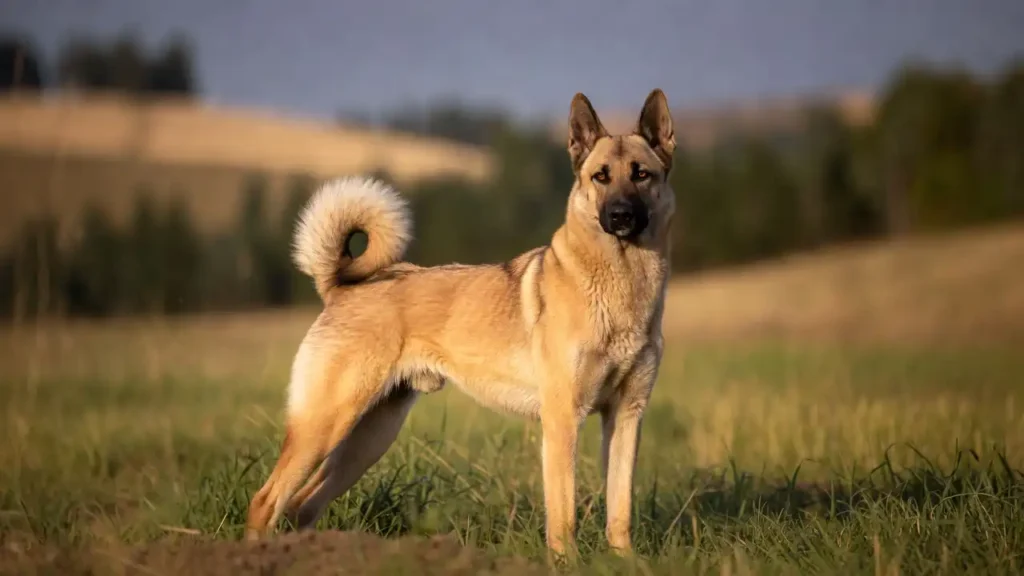
Purebred Anatolians are large, powerfully built dogs. Males typically stand 29 inches or taller at the shoulder and weigh between 110 and 150 pounds. Females are slightly smaller, usually 27 inches and 80–120 pounds. The body is slightly longer than tall, with a deep chest, strong hindquarters, and a broad, muscular neck. This is a working dog — not lean and racy, but not heavy and blocky either. Think “athletic endurance” rather than “show muscle.”
Head and Facial Structure
The head is large, broad, and slightly domed at the crown. The muzzle is blunt and strong — not pointy like a sighthound, not smushed like a Mastiff. There should be a visible but not dramatic stop (the transition between the forehead and muzzle). Eyes are medium-sized, almond-shaped, and set apart. Eye color ranges from dark brown to light amber or even hazel. The ears are V-shaped, dropping down against the head, and carried flat — they lift slightly when the dog is alert.
Coat Color and Texture
One of the most misunderstood aspects of Anatolians is their coat. Many people expect all Anatolians to be fawn with a black mask — the classic look. But purebred Anatolians come in a wide variety of colors including white, brindle, spotted, and various shades of fawn and sable. The coat can be short (about 1 inch) or rough (up to about 4 inches), with a dense undercoat. Both coat types are acceptable in purebred dogs.
Don’t dismiss a dog as non-purebred just because it isn’t the stereotypical fawn-with-black-mask color. Anatolians are one of the most color-variable breeds recognized by the AKC. Color alone is not a reliable identifier.
Tail and Gait
The tail is long and set moderately high. When relaxed, it hangs in a slight curve. When the dog is alert or moving, it curls up over the back — a characteristic “wheel tail.” The gait is smooth, powerful, and ground-covering. Anatolians move with a slight roll at the shoulder when trotting. If your dog trots in a high-stepping, flashy way, that’s atypical for the breed.
Temperament Clues That Indicate True Anatolian Heritage
Physical appearance can be deceptive with mixed breeds. Temperament is often more revealing, especially in working-line dogs. Purebred Anatolians have a very characteristic behavioral profile that’s hard to mimic through crossbreeding.
- Independent and confident: A true Anatolian doesn’t look to you for direction the way a retriever or herding dog does. They think for themselves. This independence is a feature — it’s what allows them to make guardian decisions without human input.
- Territorial with strangers: A purebred Anatolian will be suspicious and watchful around unfamiliar people, especially on their home territory. This isn’t aggression — it’s measured caution.
- Calm under normal conditions: Despite their guarding nature, Anatolians are not excitable or hyper. They conserve energy and observe. Many owners describe them as “quiet powerhouses.”
- Bonded to their flock or family: Whether that’s goats, sheep, or children, Anatolians bond deeply to whoever they perceive as their charge. They’ll position themselves physically between that group and perceived threats.
- Nocturnal vigilance: Purebred Anatolians are often more active and vocal at night — historically when predators were most active. This is deeply ingrained behavior.
In my experience working with large guardian breeds, a dog that’s overly eager to please, obsessed with playing fetch, or lacks any territorial awareness is likely carrying significant outside-breed genetics — regardless of how it looks physically.
Reviewing Paperwork and Registration Documents
If the seller provided paperwork, this is your first verification stop — but paperwork alone doesn’t guarantee a purebred dog. Fraudulent registrations do exist, and not all registries maintain the same standards.
What Reputable Registrations Look Like
The American Kennel Club (AKC) and the United Kennel Club (UKC) are the two most credible U.S. registrations for Anatolian Shepherd Dogs. AKC papers include a registration number that can be verified directly on the AKC website. The registration should list both parents with their own registration numbers. If you can trace the lineage back several generations, that’s a strong signal.
Red Flags in Documentation
- Registration from unknown or unverifiable registries (there are many low-quality “registries” that will register any dog for a fee)
- Parents listed as “unknown” or with no registration numbers
- Papers that can’t be verified with the issuing organization
- Seller who cannot provide veterinary records showing breed identification by a professional
- Litter not registered — “you can register yourself later” is a common workaround for questionable lineage
Many people buying an Anatolian Shepherd don’t realize that “AKC Registered” on its own doesn’t confirm breed quality or even full purity. The AKC registers based on reported parentage — they don’t physically inspect dogs. Registration confirms the breeder’s claim, not absolute DNA truth. For true verification, DNA testing is the gold standard.
DNA Testing: The Most Reliable Method
If you want certainty — not just educated guessing — canine DNA testing is the way to go. The technology has improved dramatically in the past decade, and it’s now affordable and accessible for any dog owner.
How Canine DNA Testing Works
You order a kit, swab the inside of your dog’s cheek, and send it to a lab. Within a few weeks, you get a detailed breed composition report. Services like Embark and Wisdom Panel are the most widely used and most accurate for purebred verification.
For Anatolian Shepherds specifically, Embark tends to perform well because of its large reference database of Turkish and Anatolian working dog genetics. If your dog comes back as 100% Anatolian Shepherd Dog, that’s strong confirmation. If you see a mix — say 75% Anatolian and 25% Great Pyrenees — your dog is a cross, even if it looks purebred to the eye.
Limitations of DNA Testing
DNA tests are accurate but not perfect. The Anatolian Shepherd breed has historical overlap with related Turkish and Central Asian breeds, which can sometimes affect how the algorithm categorizes certain dogs. A dog that tests as “97% Anatolian” with a small percentage of a related breed may simply reflect historical breed development, not deliberate crossbreeding. Consult the testing company’s methodology notes if results seem unexpected.
Comparing to the AKC Breed Standard: A Quick Reference
| Trait | Purebred Anatolian Standard | Common Mix Signs |
|---|---|---|
| Height (male) | 29+ inches at shoulder | Under 26 inches or over 33 inches |
| Weight (male) | 110–150 lbs | Under 80 lbs or significantly over 160 lbs |
| Coat | Short or rough with dense undercoat | Wavy, silky, or long without undercoat |
| Tail | Long, curls over back when alert | Docked, or carried consistently low |
| Ear shape | V-shaped, dropped flat to head | Large, erect, or rose-shaped |
| Temperament | Independent, calm, territorial, bonded | Extremely handler-dependent or hyperactive |
| Color | All colors accepted including white, brindle, fawn | Merle coloring (not found in purebred Anatolians) |
Mini Case Study: The “Anatolian” That Wasn’t
A family in rural Tennessee purchased a puppy from a classified ad promising “purebred Anatolian Shepherd, farm-raised, ready to guard.” The price was right, the puppy was adorable, and the seller had partial paperwork. At 18 months, the dog weighed 68 pounds and measured 24 inches at the shoulder. The coat was wavy with no undercoat, and the dog showed no territorial behavior — in fact, it was enthusiastic and friendly with every stranger who came onto the property.
A DNA test confirmed the dog was approximately 50% Anatolian Shepherd, 30% Labrador Retriever, and 20% unknown mixed breed. A lovely, healthy dog — but not suited for the livestock guardian role the family needed. Had they compared physical traits carefully and asked for AKC-verifiable lineage before purchasing, the mismatch could have been avoided.
Mini Case Study: When Looks Are Deceiving in the Opposite Direction
On the flip side, a livestock producer in Montana rescued a large, fawn-colored dog with a black mask from a shelter. The shelter had labeled it “mixed breed, possibly shepherd mix.” At 130 pounds, it looked — and acted — exactly like an Anatolian. It bonded immediately to the sheep, patrolled at night, showed calm suspicion of strangers, and displayed the classic wheel tail.
DNA testing confirmed 98% Anatolian Shepherd genetics. The dog was almost certainly a purebred animal that had been lost or surrendered. Many Anatolian Shepherd owners don’t realize how often purebred dogs end up in shelters without any documentation. Physical and behavioral assessment, combined with DNA testing, can surface these hidden gems.
When to Consult a Veterinarian or Breed Expert
If you’re still uncertain after reviewing physical traits and documentation, a veterinary examination can add useful perspective. While vets aren’t breed registrars, an experienced large-breed veterinarian can offer a professional assessment of bone structure, muscle development, and overall conformation. The American Veterinary Medical Association maintains a directory that can help you find qualified professionals in your area.
You can also contact the Anatolian Shepherd Dog Club of America (ASDCA), which connects prospective owners and current owners with experienced breeders who can evaluate photos or even video of your dog. This community knowledge is often underused and highly valuable.
For broader guidance on ownership, care, and breed verification, trusted Anatolian Shepherd care guides can help you build a strong foundation of knowledge as an owner.
Step-by-Step Process for Verifying Purebred Status
- Compare physical traits to the AKC breed standard — size, head, coat, tail, and gait.
- Assess temperament — independence, territorial behavior, nocturnal activity, and flock bonding are strong indicators.
- Review all paperwork — verify AKC or UKC registration numbers directly with those organizations.
- Order a canine DNA test — Embark or Wisdom Panel are the most reliable options for this breed.
- Consult a veterinarian for a professional conformation assessment if needed.
- Reach out to breed clubs — the ASDCA community can provide experienced second opinions.
Before purchasing a puppy, ask the breeder to let you visit in person, meet both parents, and verify their AKC numbers before you pay a deposit. Any reputable breeder will welcome this. Hesitation or avoidance should be an immediate red flag.
Common Breeds Often Confused With Anatolian Shepherds
Several breeds share enough visual similarity with Anatolians to cause genuine confusion, especially in dogs without documentation. These include:
- Great Pyrenees: White or cream, large, double-coated — but heavier-boned and more sociable than Anatolians. Often crossed with Anatolians in working farm settings.
- Kangal: Very closely related, sometimes considered the same breed under different naming conventions. Usually more uniformly fawn with a distinct black mask.
- Central Asian Shepherd Dog (Alabai): Larger, heavier, and more bear-like. Often confused in rescue situations.
- Kuvasz: White, large, Hungarian livestock guardian — different head structure and coat texture.
- Caucasian Shepherd Dog (Ovcharka): Far more massive, longer coat. More aggressive by temperament.
Understanding these distinctions is part of being a responsible Anatolian Shepherd owner. For more detailed breed comparison content and Anatolian Shepherd ownership advice, the resources available through dedicated breed communities are invaluable.
A Note on the Kangal and Anatolian Debate
In Turkey, the dogs Americans call “Anatolian Shepherds” are often identified more specifically as Kangals, Akbash, or other regional variants. The AKC recognizes the Anatolian Shepherd Dog as a distinct breed; so does the FCI under a different classification. This means that even within the “purebred” category, there’s ongoing debate among Turkish breed enthusiasts about whether American Anatolians represent a cohesive breed or a broader regional grouping. This doesn’t diminish the value of AKC registration — but it’s worth knowing this context. The AKC breed history page for Anatolian Shepherds offers good background on this topic.
Conclusion: Knowledge Protects You and Your Dog
If you’ve landed on this page with doubts about your dog’s origins, that curiosity says something good about you as an owner. You want to understand what you have — and you want to do right by the dog. That instinct will serve you well throughout your time with an Anatolian.
Whether your dog turns out to be a certified purebred or a wonderful cross with strong Anatolian heritage, the most important step is knowing what you’re working with. That knowledge shapes how you train, how you manage, and how you position your dog for the life they were built to live.
Document everything you can — DNA results, vet records, registration papers. Build your knowledge of the breed so you can recognize authentic traits as your dog matures. And for ongoing support as an Anatolian owner, explore the full library of trusted Anatolian Shepherd resources to guide you through every stage of ownership.
These dogs deserve owners who understand them. You’re already on that path.
Frequently Asked Questions
How can I tell if my Anatolian Shepherd is purebred without papers?
You can compare your dog’s physical traits against the AKC breed standard — checking size, head shape, coat, tail carriage, and gait. Behavioral assessment is also helpful; purebred Anatolians tend to be independent, territorial, calm, and naturally bonded to a flock or family. For definitive confirmation, a canine DNA test from a service like Embark or Wisdom Panel is the most reliable option available to owners without documentation.
What color should a purebred Anatolian Shepherd be?
Purebred Anatolian Shepherds come in a wide range of colors, including fawn with black mask, white, brindle, spotted, sable, and various combinations. Unlike some breeds where color is tightly standardized, Anatolians have historically come in many shades due to their regional working origins. The one color you should not see in a purebred Anatolian is merle — that pattern indicates outside breed genetics.
Is DNA testing accurate for Anatolian Shepherds?
DNA testing is the most accurate method available for verifying breed composition. Services like Embark tend to perform well for Anatolian Shepherds because of their extensive reference databases. One important nuance: Anatolians share genetic heritage with several related Turkish and Central Asian breeds, which can occasionally produce mixed readings in dogs that are genuinely purebred. A result showing 95–100% Anatolian is strong confirmation; a result showing 70% or less likely indicates crossbreeding.
What’s the difference between an Anatolian Shepherd and a Kangal?
This is one of the most debated questions in large guardian breed communities. In Turkey, the Kangal is considered a distinct regional breed — characterized by a very specific fawn-and-black-mask appearance and precise physical standards. In the United States, the AKC recognizes the Anatolian Shepherd as a broader breed that encompasses Kangal and other regional Turkish types. Many experts consider them the same gene pool; others maintain meaningful distinctions. For AKC registration and working purposes, an Anatolian Shepherd dog in the U.S. may carry Kangal-dominant genetics.
How large should a full-grown purebred Anatolian Shepherd be?
A full-grown male Anatolian Shepherd should stand at least 29 inches at the shoulder and weigh between 110 and 150 pounds. Females are typically 27 inches and 80–120 pounds. Dogs that fall significantly below these ranges — say, a 70-pound dog claiming to be an Anatolian — are very likely a cross. Dogs significantly above these ranges (over 170 pounds) may carry Mastiff or other large-breed genetics, as purebred Anatolians are powerful but not massively heavy.
Can a purebred Anatolian Shepherd be found in a rescue or shelter?
Absolutely, and more often than most people realize. Anatolian Shepherds are sometimes surrendered or lost without any documentation, and shelters often lack the breed knowledge to correctly identify them — labeling them “shepherd mix” or “mastiff mix.” If you encounter a large, calm, fawn-colored guardian dog at a shelter that shows the characteristic temperament and physical traits described above, it’s worth investing in a DNA test before dismissing its potential. Breed-specific rescues focused on livestock guardian dogs are also valuable adoption resources.
Do Anatolian Shepherd puppies look different from other large breed puppies?
Anatolian puppies can be harder to identify than adults because many large breed puppies share similar features early on. That said, even at 8–10 weeks, Anatolian puppies tend to have a broad, blocky head, substantial bone structure for their age, and a somewhat serious or watchful expression compared to more playful breed puppies. Their feet are large relative to their body — a sign of the size to come. If you’re purchasing a puppy, meeting both parents and verifying their registration is far more reliable than trying to assess the puppy alone.
🐾 Author Bio (E-E-A-T Format)
Written by: Jordan M. Calloway, Large Guardian Breed Content Writer at AnatolianShepherd.me
Experienced Anatolian Shepherd owner with hands-on knowledge of guardian dog care, behavior, and health.
Content reviewed using trusted veterinary references and real owner experience for accuracy and reliability.
This content is for educational purposes only and does not replace professional veterinary or insurance advice.
Pingback: How to Socialize an Anatolian Shepherd Puppy - Anatolian Shepherd