Anatolian Shepherd Male vs Female: Which One Is Right for You?
You’ve done the research. You’ve decided an Anatolian Shepherd is the breed for your family, your farm, or your land. But now you’re staring at a litter — or a breeder’s availability list — and the question hits you harder than expected: male or female?
It feels like a coin-flip decision, but it isn’t. With a breed this powerful, this independent, and this deeply driven by instinct, the gender you choose shapes your daily reality for the next 11 to 13 years. Pick wrong, and you’re swimming upstream against a dog’s natural wiring. Pick right, and things click into place in ways that almost feel effortless.
As an Anatolian Shepherd owner, I’ve noticed this question causes more anxiety than almost any other — and for good reason. These aren’t golden retrievers. The differences between a male and female Anatolian aren’t subtle.
This guide breaks down every real-world difference that actually matters — size, temperament, guarding style, trainability, and who fits best in your specific situation. No fluff, no textbook abstractions. Just straight talk from hands-on guardian breed experience.
Size Differences: Males Are Bigger Than You Think
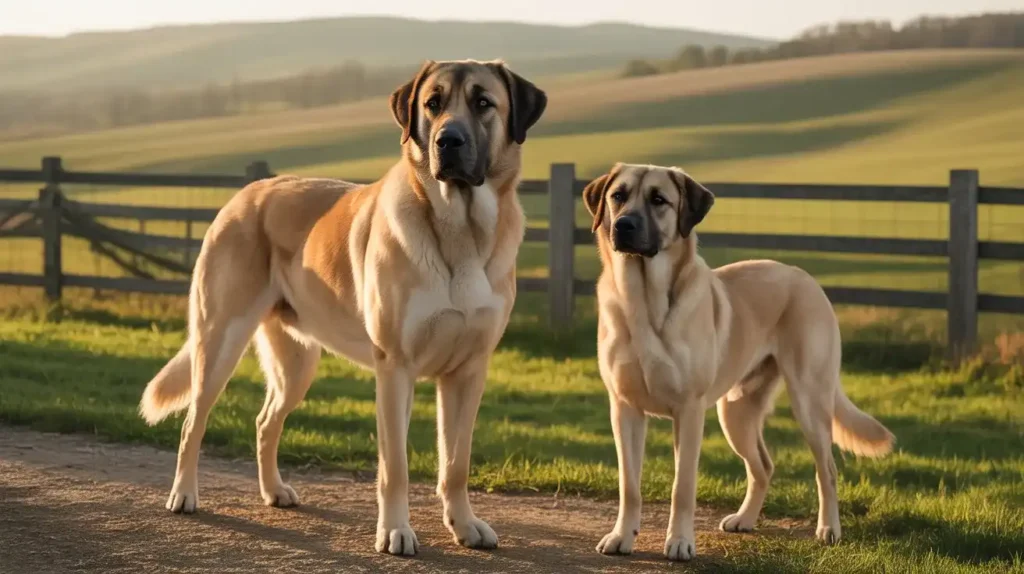
The size gap between male and female Anatolian Shepherds is one of the most dramatic in the dog world. This isn’t a five-pound difference like you’d see in a Labrador.
Male Anatolian Shepherds
- Height: 29–32 inches at the shoulder
- Weight: 110–150 lbs (some exceed 160 lbs)
- Build: Heavier bone, thicker neck, broader chest, more imposing head
Female Anatolian Shepherds
- Height: 27–30 inches at the shoulder
- Weight: 80–120 lbs
- Build: Leaner, more athletic frame, lighter bone structure, quicker on their feet
According to the American Kennel Club’s breed standard, the Anatolian Shepherd is one of the larger livestock guardian breeds — and that size difference between the sexes is significant when you’re talking about daily handling, veterinary visits, and physical control.
In my experience working with large guardian breeds, a 140-pound male Anatolian pulling toward a coyote on a dark night feels completely different from managing a 95-pound female in the same situation. If physical size and handling ease matter to you, this alone could sway your decision.
Temperament Differences: Two Very Different Personalities
This is where it gets real. Male and female Anatolian Shepherds often feel like two different breeds living under the same name.
Male Temperament
Males tend to be more overtly dominant and territorial. They’ll challenge boundaries — yours and everyone else’s. A male Anatolian often displays more bravado: louder barking, wider patrol routes, and a heavier “presence” that says this is my territory.
But here’s what surprises many first-time Anatolian owners: males are frequently the more affectionate gender. Many male Anatolians are genuine velcro dogs with their family. They want to be near you, lean on you, and check in on you — between their patrol rounds, of course.
Female Temperament
Females are typically more independent and calculating. Where a male charges first and thinks later, a female Anatolian assesses, decides, and then acts with precision. They tend to be less “in your face” with both affection and dominance — but don’t mistake that for softness.
A female Anatolian can be fiercely stubborn in a quiet way. She won’t argue with you. She’ll just… decide not to listen. Many experienced owners describe female Anatolians as “cats in a dog’s body” because of that cool, independent streak.
🐾 Pro Tip: If you want a dog that’s more emotionally attached to the family, males often edge ahead. If you want a dog that independently makes smart decisions on the farm with less handholding, females frequently excel.
Protection and Guarding Instincts: Different Styles, Same Commitment
Both genders will guard. That instinct is deep, ancient, and non-negotiable in this breed. But how they guard is often distinctly different.
How Males Guard
Males are perimeter-focused. They want to push threats away from the property line. You’ll find a male Anatolian pacing the fence line, barking at things a quarter-mile out, and making his presence known well before a predator or stranger gets close. Their guarding style is loud, broad, and intimidating by sheer physical force.
How Females Guard
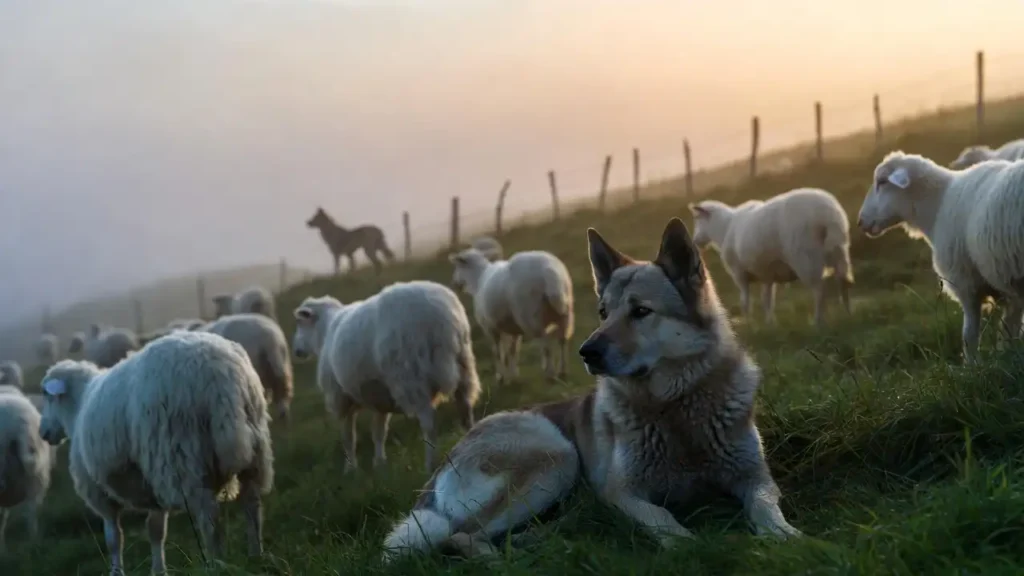
Females tend to stay closer to their charges — the flock, the kids, the family. Rather than pushing outward, a female Anatolian is more likely to position herself between the threat and whatever she’s protecting. She’s the last line of defense. Quieter, closer, and arguably more tactically effective in many livestock situations.
Many working ranch owners run a pair — one male, one female — for exactly this reason. The male pushes threats out. The female covers what’s behind him. It’s a layered security system that Anatolian Shepherds have been perfecting for thousands of years. You’ll find more practical guidance on working with this breed’s instincts in trusted Anatolian Shepherd resources.
Trainability: Expect Independence From Both
Let’s be blunt: neither gender of Anatolian Shepherd is “easy” to train in the way a German Shepherd or Border Collie is. This is a breed that was designed to make life-or-death decisions alone in the mountains of Turkey without human input. Obedience for the sake of obedience is not in their DNA.
That said, there are differences.
Males can be easier to motivate during early training because they’re often more food-driven and more eager for approval. However, adolescent males (roughly 10 months to 2.5 years) will test your leadership relentlessly. If you’re not calm, consistent, and confident, a male Anatolian will run the household.
Females mature faster mentally and often seem “smarter” earlier. They pick up on patterns quickly. But they’re less motivated by your praise and more motivated by whether your request makes sense to them. If a female Anatolian doesn’t see the point, she won’t do it — no amount of treats will change her mind.
⚠️ Expert Warning: Anatolian Shepherds of either sex are not recommended for owners who rely heavily on punishment-based training. This breed does not respond well to heavy corrections — they shut down, become avoidant, or escalate. Firm, fair, and consistent leadership is the only approach that works long-term.
Behavior With Children and Livestock
With Children
Both genders can be wonderful with children they’re raised alongside. Anatolians often view children as “their flock” and become deeply protective. However, males can be physically overwhelming for small children simply because of their size and occasional clumsiness. A 130-pound male enthusiastically greeting a toddler is a physics problem.
Females tend to be gentler and more measured around young children. They’re less likely to knock a kid over during play and often display a more intuitive sense of a child’s fragility.
With Livestock
Here’s where real-life observations become critical.
Case Example #1: A rancher in central Texas ran a male Anatolian with a goat herd. The dog was an exceptional perimeter guardian — coyote pressure dropped to near zero within weeks. But the male occasionally played too rough with young kids (baby goats), pinning them down in what looked like dominance behavior. Adding a female Anatolian to the mix solved it immediately. She stayed with the herd while the male patrolled, and livestock losses from both predators and rough play went to zero.
Females are generally preferred as primary livestock guardians by experienced working dog owners because they stay closer to the animals, cause less disruption, and reach working maturity sooner.
Same-Sex Aggression: A Serious Consideration
This is not optional reading. Same-sex aggression is a known trait in Anatolian Shepherds and many other livestock guardian breeds.
Two intact males in the same household or working area is a recipe for serious conflict. These are dominant, territorial dogs. Two males will often test each other constantly, and as they mature, those tests escalate into genuine fights that can result in injury.
Two females can also clash, though it often develops later and more subtly. Female-on-female aggression in Anatolians is frequently described as “cold” — there’s no posturing or warning, just sudden conflict that can be difficult to manage.
A male-female pair is the most stable combination for multi-dog households, especially if both are spayed/neutered. This is the pairing most experienced Anatolian breeders recommend.
Case Example #2: A hobby farmer in Oklahoma housed two female Anatolians who coexisted peacefully for the first 18 months. Around the two-year mark — right when both dogs hit social maturity — a serious fight broke out over a high-value resource (a bone near the barn). After that, the dogs had to be permanently separated, effectively doubling the management workload. The farmer later said he wished he’d known to choose a male-female pair from the start.
Energy Levels and Maturity Timeline
Anatolian Shepherds are not high-energy dogs in the traditional sense. They’re designed for calm vigilance, not fetch marathons. But there’s a meaningful difference in how each gender matures.
Females typically reach mental maturity around 2 to 2.5 years. You’ll often see a female “settle in” to her guardian role noticeably earlier than a male.
Males can take 3 to 4 years to fully mature. That extended adolescent phase means more testing, more boundary-pushing, more “selective hearing,” and more patience required from you. A two-year-old male Anatolian still has a lot of growing up to do.
Both genders are most active at dawn and dusk — their natural patrol times. During the day, expect long stretches of rest punctuated by alert scanning of the environment.
Neutering and Spaying Considerations
This is a topic that deserves more nuance than it usually gets, especially in a large, slow-maturing breed like the Anatolian Shepherd.
Early spay/neuter (before 12–18 months) in giant breeds has been associated with increased risks of joint disorders and certain cancers, according to research published through the American Veterinary Medical Association. For Anatolians, many breeders and experienced owners recommend waiting until the dog has reached physical maturity — often around 18 to 24 months — before altering.
For males: Neutering can reduce some roaming and marking behavior, but it will not “fix” dominance or aggression issues rooted in temperament. A dominant Anatolian male is dominant regardless of his hormonal status.
For females: Spaying eliminates heat cycles (which occur roughly every 6–8 months) and prevents unplanned litters. If you’re running a female as a working livestock guardian alongside intact males in neighboring properties, spaying is practically essential.
Always consult your veterinarian about timing based on your individual dog’s development. There’s no one-size-fits-all answer here.
Male vs Female Anatolian Shepherd: Comparison Table
| Trait | Male Anatolian | Female Anatolian |
|---|---|---|
| Height | 29–32 inches | 27–30 inches |
| Weight | 110–150+ lbs | 80–120 lbs |
| Dominance Level | High — tests boundaries frequently | Moderate — quietly independent |
| Affection Level | Often more affectionate / velcro | Affectionate but on her terms |
| Guarding Style | Perimeter patrol, wide-range, loud | Close-guard, stays near flock/family |
| Trainability | Motivated by food/praise; tests leader | Quick learner; cooperates if she sees the point |
| Maturity | 3–4 years (slow) | 2–2.5 years (faster) |
| Same-Sex Aggression | High risk with other males | Moderate risk; can be sudden |
| With Children | Loving but physically overwhelming | Gentler, more intuitive around small kids |
| With Livestock | Excellent deterrent; can play rough | Preferred by many ranchers for flock work |
| Best For | Property deterrent, experienced owners | Livestock work, families, first-time LGD owners |
Which Gender Is Best for Your Situation?
First-Time Guardian Dog Owners
Recommended: Female. She’ll mature faster, challenge you less during adolescence, and typically requires less physical management. A female Anatolian gives you more room for the inevitable learning curve that comes with your first livestock guardian breed.
Farm and Ranch Owners
Recommended: Female for primary livestock work, or a male-female pair. If you can only have one dog with your herd, a female’s instinct to stay close to her charges is usually more effective for daily flock protection. If predator pressure is high, adding a male for perimeter work creates a formidable team.
Family Homes
Either gender can work well with proper socialization and training. If you have very young children, a female may be easier to manage around them. If you want a dog that’s more of a family companion who also guards the property, many owners find males fill that role naturally.
Multi-Dog Households
Recommended: Opposite-sex pairing. This reduces the risk of same-sex aggression and creates a more balanced working dynamic. Avoid two intact males in the same space — the risk of serious conflict is simply too high with this breed. For more Anatolian Shepherd ownership advice, including managing multi-dog dynamics, it helps to learn from others who’ve been through it.
Frequently Asked Questions
Are male Anatolian Shepherds more aggressive than females?
Not necessarily more aggressive, but males tend to be more overtly dominant and confrontational with perceived threats — including other dogs. Females can be equally protective but express it differently. True aggression in either sex usually stems from poor socialization, not gender alone. Both need firm, consistent leadership from puppyhood to develop into stable adult dogs.
Can I keep two male Anatolian Shepherds together?
It’s generally not recommended, especially if both dogs are intact. Two males will frequently compete for dominance as they reach social maturity (around 2–3 years), and conflicts between Anatolians of this size can cause serious injuries. If you need two Anatolians, a male-female pair is the safer and more proven combination.
Which gender is better for guarding livestock?
Most working ranch owners prefer females as their primary livestock guardian because females instinctively stay closer to the flock and cause less disruption among the animals. Males are excellent for broad property and perimeter defense. The ideal setup for serious predator pressure is a male-female pair working together.
Do female Anatolian Shepherds bond less with their owners?
Females absolutely bond with their owners — they just show it differently. Where a male might lean against you and follow you from room to room, a female is more likely to position herself where she can watch over you from across the yard. It’s less clingy, more “quiet loyalty.” Many owners come to deeply appreciate that independent devotion.
At what age should I neuter or spay my Anatolian Shepherd?
Most breed-experienced veterinarians and breeders recommend waiting until the dog is physically mature — typically 18 to 24 months for Anatolians. Early alteration in large breeds has been linked to joint problems and certain health risks. Have a direct conversation with your vet about the best timing for your specific dog’s health and development. The AKC’s spay/neuter FAQ offers a helpful overview of the factors involved.
Is a female Anatolian Shepherd easier to train?
In some ways, yes. Females tend to mature mentally about a year earlier than males, which means you often see them “settle” into reliable behavior sooner. They’re quick learners, though their cooperation depends on whether they find your request logical. Males may be more food-motivated during training sessions, but the longer adolescent phase means more patience is required.
Which gender is safer with small children?
Both genders can be safe and wonderful with children when properly socialized and supervised. However, females are often gentler around toddlers and small kids simply because of their smaller size and more measured physical behavior. Regardless of gender, you should never leave any large guardian breed unsupervised with young children — that’s basic safety with any dog over 80 pounds.
Final Thoughts: It’s About the Right Fit — Not the “Better” Gender
Here’s the truth that gets lost in every male vs. female debate: both genders of Anatolian Shepherd are extraordinary dogs. They’ve been protecting livestock and families across Turkey’s harsh terrain for thousands of years. That heritage lives in every puppy, regardless of whether it’s a male or female.
The “right” choice depends entirely on your situation — your property, your experience, your family, and your expectations. A well-raised, well-socialized Anatolian of either gender will protect your home, bond with your family, and earn your respect in ways you can’t fully appreciate until you’ve lived with one.
What matters far more than gender is your commitment to leadership, socialization, and understanding this breed’s independent nature. An Anatolian Shepherd doesn’t need a drill sergeant. It needs a calm, fair leader who respects the dog’s intelligence and instincts.
If you’re still weighing your options, don’t rush. Talk to breeders. Visit working Anatolians in person. And keep exploring Anatolian Shepherd care guides to build the knowledge that will make you the best owner possible — no matter which gender you bring home.
You’ve got this.
🐾 Author Bio
Written by: Sarah Mitchell, Large Guardian Breed Content Writer at AnatolianShepherd.me
Experienced Anatolian Shepherd owner with hands-on knowledge of guardian dog care, behavior, and protection instincts.
Content reviewed using trusted veterinary references and real owner experience for accuracy and reliability.
Disclaimer: This content is for educational purposes only and does not replace professional veterinary advice.