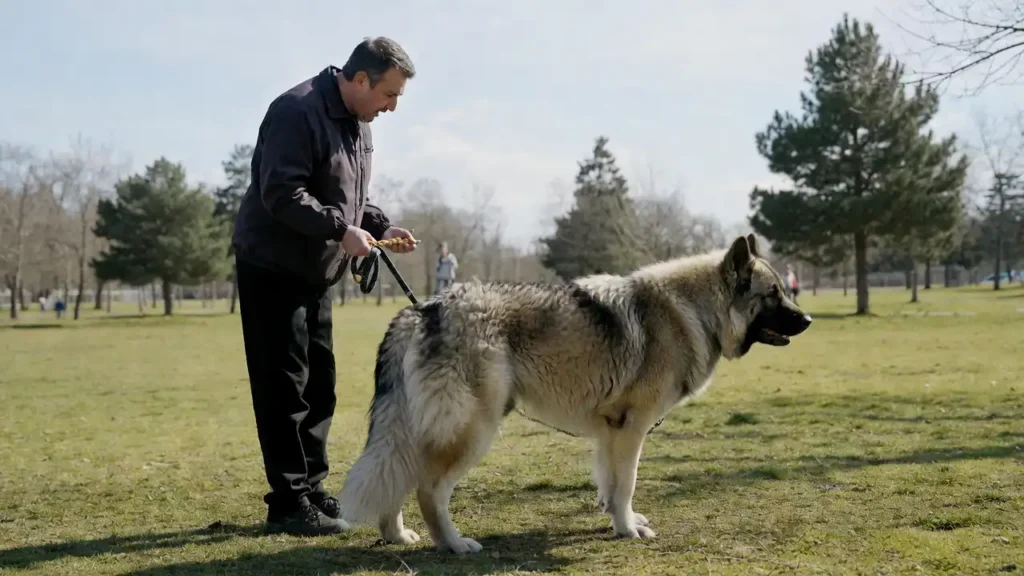
You’ve done everything right—or so you thought. You followed the training videos, bought the best equipment, invested hours of your time. Yet your Anatolian Shepherd still ignores your commands, pulls like a freight train on walks, and seems to have selective hearing whenever it matters most.
Sound familiar? You’re not alone, and more importantly, you’re not failing.
The problem isn’t your dog. It’s that most training advice is designed for eager-to-please breeds like Golden Retrievers and German Shepherds—dogs bred to take direction. Anatolian Shepherds were bred to think for themselves, make independent decisions, and question authority when they believe they know better.
As an Anatolian Shepherd owner, I’ve seen countless well-meaning owners make the same training mistakes that actually work against this breed’s natural instincts. Let’s fix that.
Why Standard Dog Training Often Fails With Anatolian Shepherds
Before we dive into specific mistakes, you need to understand something fundamental about your dog.
Anatolian Shepherds spent thousands of years in the mountains of Turkey, guarding livestock with minimal human supervision. Their survival—and the survival of their flocks—depended on independent thinking, not blind obedience.
According to the American Kennel Club, the Anatolian Shepherd is “highly intelligent” with a “tendency toward independence.” This isn’t a flaw to train out—it’s the essence of the breed.
When you understand this, training mistakes become obvious. You’re not dealing with a dog that lives to please you. You’re dealing with a thinking partner who needs to understand why your requests make sense.
Mistake #1: Using Dominance-Based Training Methods
This is the most damaging mistake I see with guardian breed owners, and it often comes from well-intentioned but outdated advice.
Dominance theory—the idea that you must be the “alpha” and physically or psychologically dominate your dog—has been thoroughly debunked by modern animal behaviorists. The American Veterinary Medical Association warns that dominance-based methods can increase fear and aggression in dogs.
With Anatolian Shepherds, this approach is particularly dangerous. These dogs were bred to challenge predators—wolves, bears, even humans who threatened their flock. A dog that backs down from confrontation wouldn’t survive.
What Happens When You Try to Dominate an Anatolian
In my experience working with large guardian breeds, dominance tactics typically create one of two outcomes:
- The dog escalates — They meet your confrontation with resistance, leading to a dangerous power struggle with a 100+ pound dog
- The dog shuts down — They become fearful and unpredictable, losing trust in you as a leader
Neither outcome creates the cooperative partnership you need.
What to Do Instead
Focus on building respect through consistency, fairness, and demonstrating good leadership. Control resources (food, toys, access to spaces) not through force, but through structure. Your Anatolian will follow a leader they respect—not one they fear.
Mistake #2: Expecting Instant Obedience
Many Anatolian Shepherd owners don’t realize that their dog’s “slow” response to commands isn’t defiance—it’s deliberation.
Watch an Anatolian Shepherd when you give a command. You’ll often see them pause, assess the situation, and then decide whether to comply. This “thinking pause” frustrates owners used to breeds that respond immediately.
The mistake is interpreting this pause as disobedience and either repeating the command (teaching your dog to ignore the first several requests) or escalating your tone (teaching your dog that you’re unpredictable).
Working With the Pause
- Give the command once, clearly
- Wait 3-5 seconds for processing
- If no response, gently guide your dog into position
- Reward compliance generously
- Build reliability gradually over many repetitions
Mistake #3: Insufficient Socialization During the Critical Window
This mistake has consequences that last a lifetime, and it’s heartbreakingly common with Anatolian Shepherds.
The critical socialization window closes around 16 weeks of age. During this time, your puppy’s brain is literally wiring itself to determine what’s “normal” and “safe” in the world. Experiences during this period shape your dog’s reactions for life.
Many owners keep their Anatolian puppies isolated during this time—waiting for full vaccination, worrying about overwhelming them, or simply not realizing the urgency. The result is often a fearful, reactive adult dog.
What Proper Socialization Looks Like
Socialization isn’t just exposure—it’s positive exposure. Your puppy needs to experience:
- Different types of people (ages, appearances, uniforms, accessories)
- Various animals (dogs of different sizes, cats, livestock if appropriate)
- Urban and rural environments
- Different surfaces, sounds, and situations
- Handling by strangers (vets, groomers, visitors)
For comprehensive guidance on raising a well-adjusted Anatolian Shepherd, explore trusted Anatolian Shepherd resources that understand this breed’s unique developmental needs.
Mistake #4: Treating Training as Separate From Daily Life
I see this constantly: owners who do formal training sessions but let their Anatolian Shepherd do whatever they want the rest of the time.
Your dog doesn’t distinguish between “training time” and “regular life.” If you require a sit before meals during training but let your dog mob you at the food bowl normally, you’re sending mixed messages.
Training Is 24/7
Every interaction with your Anatolian Shepherd is training. You’re either reinforcing behaviors you want or allowing behaviors you don’t. This doesn’t mean being rigid or militaristic—it means being consistent.
Simple daily opportunities include:
- Doorways — Practice waiting for permission before going through
- Meal times — Require calm behavior before the bowl goes down
- Greeting people — Enforce four feet on the floor
- Getting in/out of vehicles — Wait for release rather than charging
Mistake #5: Underestimating the Importance of Mental Stimulation
A tired Anatolian Shepherd isn’t just a physically exercised one—they need mental challenges too.
These dogs were bred to assess threats, make decisions, and solve problems. Without mental stimulation, they’ll create their own entertainment—often in destructive or annoying ways.
Mental Exercise Ideas
- Puzzle feeders and food-dispensing toys
- Scent work and tracking games
- Training new skills (even tricks, though Anatolians may find them undignified)
- Supervised patrols of your property
- Novel environments and experiences
Many Anatolian Shepherd owners don’t realize that 15 minutes of mental work can tire their dog more than an hour of walking.
Mistake #6: Inconsistent Rules Among Family Members
Anatolian Shepherds are masters at finding loopholes. If Dad doesn’t allow begging but Mom slips food under the table, your dog learns exactly who to target—and that rules are negotiable.
This breed will absolutely test boundaries with each family member individually. They’re not being “bad”—they’re being smart. Your job is to ensure everyone presents a united front.
Creating Family Consistency
- Hold a family meeting to agree on rules
- Post rules visibly (especially for children)
- Use the same commands and hand signals
- Agree on consequences for unwanted behavior
- Support each other—don’t undermine another family member’s training
Mistake #7: Neglecting Recall Training
A reliable recall might be the most important skill for any dog, but it’s particularly crucial—and particularly challenging—with Anatolian Shepherds.
In my experience working with large guardian breeds, poor recall is responsible for more dangerous situations than almost any other training failure. An Anatolian who won’t come when called can pursue perceived threats, get into fights, or end up in traffic.
Why Recall Is Hard for Anatolians
Their independent nature means they often evaluate whether your call is more important than whatever they’re focused on. Often, in their judgment, it’s not.
Building Reliable Recall
- Start in low-distraction environments
- Make coming to you the most rewarding thing possible
- Never call your dog to you for something unpleasant
- Practice daily, in varying situations
- Use a long line until recall is solid—never give your dog the option to ignore you
For more breed-specific training strategies, Anatolian Shepherd care guides offer practical approaches that respect this breed’s intelligence.
Mistake #8: Using Food as the Only Motivator
Food is a powerful training tool, but relying on it exclusively creates problems—especially with Anatolian Shepherds, who tend to have lower food motivation than many breeds.
If your dog only performs when treats are visible, you haven’t trained reliable behavior. You’ve trained a vending machine transaction.
Diversifying Motivation
- Life rewards — Access to desired things (going outside, greeting visitors, starting a walk)
- Play — A quick game of tug or chase
- Verbal praise — Genuine enthusiasm, which Anatolians often appreciate more than treats
- Physical affection — If your dog enjoys it
- Freedom — Release to sniff, explore, or just be a dog
Mistake #9: Giving Up Too Soon
Anatolian Shepherds mature slowly—both physically and mentally. They’re not fully adult until 2-3 years of age. Expecting a one-year-old Anatolian to behave like a mature dog sets everyone up for frustration.
Many owners see adolescent regression (when previously trained behaviors seem to disappear around 6-18 months) and conclude that training isn’t working. This is normal. Keep going.
Mistake #10: Failing to Establish Clear Boundaries
Anatolian Shepherds need to know where their territory ends and where your authority begins. Without clear boundaries—both physical and behavioral—they’ll expand their self-appointed responsibilities into areas that cause problems.
This might manifest as:
- Guarding the entire neighborhood instead of your property
- Deciding which visitors are “allowed” without your input
- Protecting family members from each other
- Resource guarding food, toys, or spaces
Setting Boundaries That Stick
Be clear about what your Anatolian is and isn’t responsible for. They don’t need to guard the whole block—just your property. They don’t need to approve every guest—that’s your job. Give them appropriate outlets for their guardian instincts while maintaining ultimate authority.
Real Owner Experiences: Training Turnarounds
Case Study 1: Michael and “Zeus”
Michael adopted a 2-year-old Anatolian Shepherd named Zeus who had received almost no training. Zeus ignored commands, pulled violently on leash, and had started showing aggression toward visitors.
“I was ready to give up,” Michael admitted. “Every trainer I contacted said I needed to be more dominant, more firm. It only made things worse.”
After switching to relationship-based training—focusing on building trust, using high-value rewards, and respecting Zeus’s need to assess situations—progress began. It took six months, but Zeus now walks calmly on leash and can be managed safely around guests.
“The turning point was when I stopped seeing his behavior as defiance and started seeing it as communication,” Michael explained. “He wasn’t challenging me. He was confused and stressed.”
Case Study 2: Emma’s Socialization Recovery
Emma’s Anatolian Shepherd, Athena, was undersocialized as a puppy due to a serious illness that limited her exposure during the critical window. By one year old, Athena was fearful of strangers and reactive on walks.
“I was told she’d never be a ‘normal’ dog,” Emma shared. “But I wasn’t willing to accept that.”
Working with a veterinary behaviorist and following a careful counter-conditioning protocol, Emma spent two years gradually expanding Athena’s comfort zone. Today, at four years old, Athena still isn’t a social butterfly—but she can handle vet visits, walks in busy areas, and visitors to the home without panic.
“She’ll never be the dog she might have been with proper early socialization,” Emma acknowledges. “But she’s confident enough to live a full life, and that’s what matters.”
Common Training Mistakes: Comparison Table
| Common Mistake | Why It Fails | Better Approach |
|---|---|---|
| Dominance-based methods | Triggers resistance or fear in guardian breeds | Build respect through consistency and fair leadership |
| Repeating commands | Teaches dog to ignore first requests | Say once, wait, then help dog succeed |
| Skipping socialization | Creates fearful, reactive adults | Prioritize positive exposure before 16 weeks |
| Inconsistent rules | Confuses dog about expectations | Ensure all family members enforce same standards |
| Food-only rewards | Creates treat-dependent behavior | Use varied rewards: praise, play, freedom, life rewards |
| Expecting fast results | Anatolians mature slowly; frustration derails training | Commit to long-term, patient progress |
When to Seek Professional Help
Not every training challenge can be solved at home. Consider working with a professional trainer or veterinary behaviorist if:
- Your Anatolian shows aggression toward people or animals
- Fear responses are severe or worsening
- Basic training methods aren’t producing any progress after consistent effort
- You feel unsafe managing your dog
- Behavioral issues are affecting your quality of life or your dog’s welfare
Look for professionals who have specific experience with livestock guardian breeds and use science-based, positive reinforcement methods. The American College of Veterinary Behaviorists maintains a directory of board-certified specialists.
Frequently Asked Questions
Why is my Anatolian Shepherd so stubborn during training?
What looks like stubbornness is usually independent thinking—a trait bred into these dogs for thousands of years. Your Anatolian isn’t refusing to obey; they’re evaluating whether your request makes sense to them. Building a relationship where your dog trusts your judgment transforms “stubborn” into “thoughtfully cooperative.” Focus on being a fair, consistent leader rather than trying to force compliance.
At what age should I start training my Anatolian Shepherd puppy?
Start the day you bring your puppy home. Basic training can begin at 8 weeks old with short, positive sessions. The critical socialization window (ending around 16 weeks) is especially important for Anatolian Shepherds—safe, positive exposure to various people, animals, and environments during this time shapes your dog’s reactions for life. Don’t wait for formal obedience classes to begin working with your puppy.
How long does it take to fully train an Anatolian Shepherd?
Anatolian Shepherds don’t reach full mental maturity until 2-3 years of age, and training is really a lifelong process with this breed. Basic obedience foundations can be established in the first year, but expect adolescent regression and the need for ongoing reinforcement. Most owners find their Anatolian becomes noticeably more reliable and settled around age three—but even then, occasional refresher training maintains good behavior.
Should I use a professional trainer for my Anatolian Shepherd?
Professional help can be valuable, but choose carefully. Many trainers have little experience with guardian breeds and may recommend approaches that backfire with Anatolians. Look for trainers who use positive reinforcement methods and have specific experience with livestock guardian breeds. Even one or two sessions with the right professional can provide insights that transform your training approach at home.
Why does my Anatolian Shepherd ignore commands they know?
Several factors could be at play. The environment might have distractions that override training (work on proofing commands in gradually more challenging settings). Your dog might not see value in complying (reassess your reward system). The behavior might not be as solid as you thought (return to basics in low-distraction environments). Or your Anatolian might be genuinely evaluating whether the command makes sense in the current context—which is their nature.
Can you train an adult Anatolian Shepherd that wasn’t trained as a puppy?
Absolutely. Adult dogs can learn new behaviors throughout their lives. The process may take longer than with a puppy, and you’ll need patience with any established bad habits. However, adult dogs also have longer attention spans and may progress quickly once they understand what you’re asking. Many rescue Anatolians with little previous training become wonderful companions with dedicated, patient work.
What’s the best training method for Anatolian Shepherds?
Relationship-based positive reinforcement works best for this breed. This means building trust, using rewards (not just food) to encourage desired behavior, and being a consistent, fair leader your dog chooses to follow. Avoid dominance-based methods, harsh corrections, or training approaches designed for eager-to-please breeds. Anatolians respond to respect, not force—they need to understand why cooperation benefits them.
Conclusion: Training Your Anatolian Shepherd Is a Partnership
If you take one thing from this article, let it be this: training an Anatolian Shepherd isn’t about domination or perfect obedience. It’s about building a partnership with an intelligent, independent dog who was bred to think for themselves.
Yes, this breed presents unique challenges. Yes, progress can feel slow. And yes, there will be days when you wonder if anything you’re doing is working.
But the relationship you build with a well-trained Anatolian Shepherd—one based on mutual respect and trust—is unlike anything else in the dog world. These dogs don’t give their loyalty easily. When you earn it, you’ve earned something precious.
Stay patient. Stay consistent. Celebrate small wins. And remember that every Anatolian Shepherd owner before you has faced the same frustrations and come out the other side with a magnificent companion.
For more breed-specific guidance on raising, training, and living with these remarkable dogs, explore Anatolian Shepherd ownership advice from people who understand what makes this breed so special—and so worth the effort.
🐾 Author Bio
Written by: Sarah Mitchell, Large Guardian Breed Content Writer at AnatolianShepherd.me
Experienced Anatolian Shepherd owner with hands-on knowledge of guardian dog care, behavior, and health.
Content reviewed using trusted veterinary references and real owner experience for accuracy and reliability.
Disclaimer: This content is for educational purposes only and does not replace professional training or veterinary behavioral advice. Always consult qualified professionals for specific concerns about your dog’s training or behavior.